







The storm passes in an hour. The bad decisions can last for years. Within a day or two, strangers with clipboards and trucks tend to appear, and some of them are not there to fix anything. Here is how a scam usually works, and what to do first so it never gets traction.
Start with safety and paperwork, not a contractor search
Before anyone gets hired, account for everyone in the household, pets included. The Better Business Bureau says cleanup and recovery should wait until that is done. It also says you should never feel pressured to rush into repairs or hire someone you do not know. That second line matters. Pressure is the scammer's main tool.
Next, document everything. Photograph and video the home, the vehicles, and the other property. Save every receipt. Those receipts support reimbursement from an insurance company. Then call your insurer and start a claim. Write down when you reported the damage and what you were told. A dull timeline is useful later if anyone asks what was approved.
Temporary fixes are fine. Permanent ones can wait.
The BBB advises against permanent repairs until the insurance company approves them. Starting early can complicate a claim. That is also why a contractor who wants to begin permanent work today, before your insurer has weighed in, deserves a hard look.
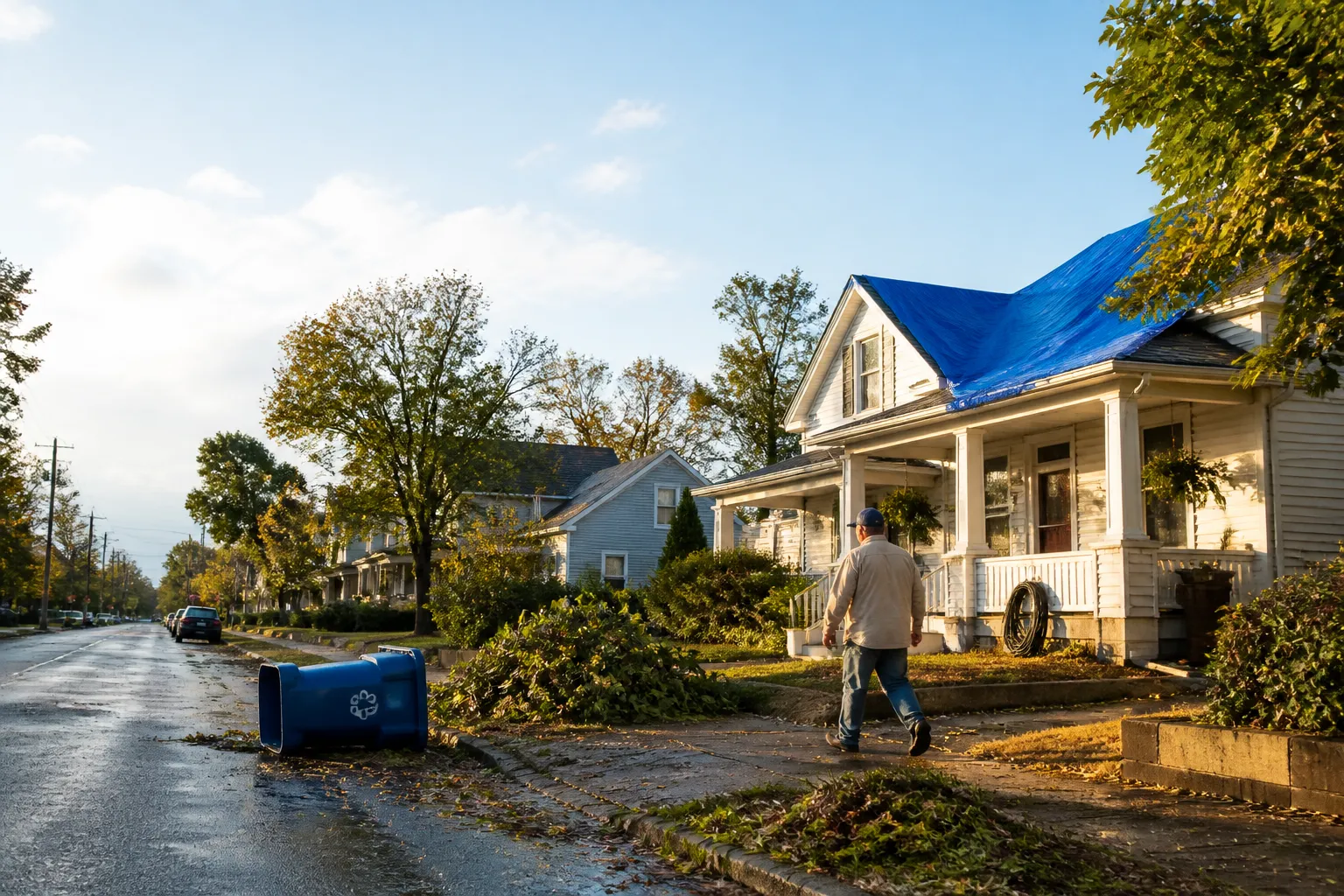
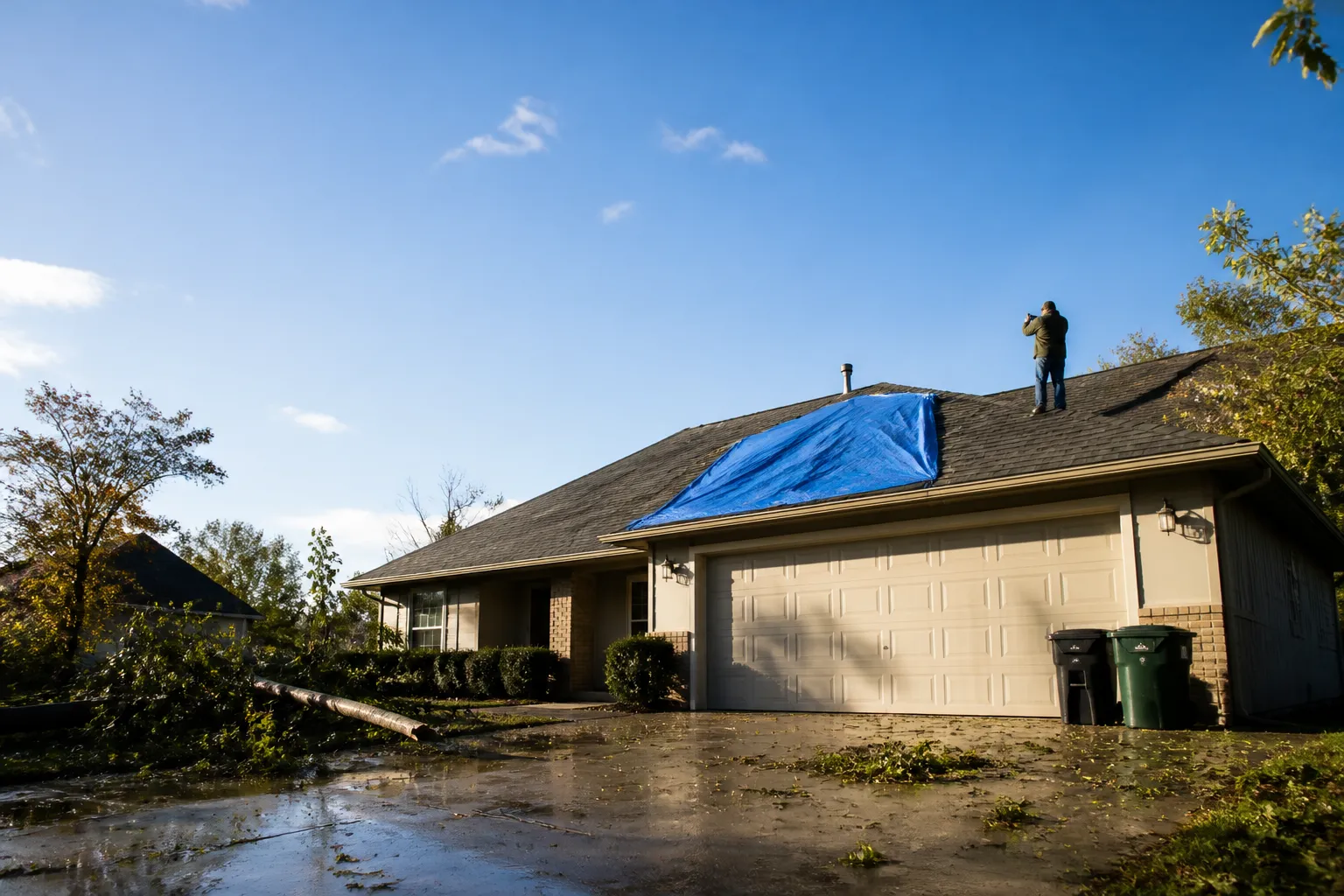
Temporary repairs are a different category. Small fixes that prevent more damage are generally reasonable. A tarp over a damaged roof. Boards over a broken window. Photograph the spot before and after. If you cannot tell whether a fix is temporary, keep it small and ask your insurer. A tarp also buys you time, and time is what lets you pick a contractor instead of grabbing the first one at the door.
Verify licensing and insurance before you sign
For roofing, the BBB advises confirming that the contractor holds any license your state requires and carries insurance. Ask for proof. A verbal assurance is not proof. Asking friends, family, and neighbors for recommendations is a sensible start, since a roof is a major investment and referrals plus your own research should come before a signature.
One limit worth stating plainly. The BBB guidance does not explain how to look up a license or check an insurance certificate. Your state licensing agency is the place to confirm a license. The insurance company named on the certificate is the place to confirm coverage. The FTC's guidance on scams after weather emergencies is a good companion read.
Read the contract like it might be read back to you
A detailed contract spells out the scope of work. Is it a spot repair or a full replacement? Will old materials be removed or just covered over? The BBB says a solid roofing contract should also address materials, warranties, payment procedures, and debris removal. Someone has to haul the waste away. Find out who, in writing.
Questions to ask before signing:
- Do you hold the license my state requires?
- Do you carry insurance?
- Is this a spot repair or a full replacement?
- Who cleans up and removes the debris?
If the contractor dodges or will not put answers on paper, treat that as an answer. The sources here do not cover deposits or payment timing, so check those terms with a consumer protection agency in your state before handing over money.
Red flags and impersonators
The usual warning signs are short and familiar:
- Pressure to start immediately.
- Pressure to hire someone you do not know.
- Unusually high prices for supplies or services after a storm. The BBB says to report these as possible price gouging.
- Permanent work started before the insurer approves it.
Then there is the caller who says they are with FEMA. The FTC has published a consumer alert on spotting FEMA impersonators, and unsolicited contact claiming federal ties is a documented tactic. Do not act on the caller's word. Confirm it independently through official channels you find yourself.
If you think you have met a scam, the FTC and the BBB's post-storm tips are the places to start for current reporting options. The roofing-specific checklist is in the BBB's roofing contractor tip sheet. This is general education, not advice for your situation. Slow is boring. Boring is cheaper.