










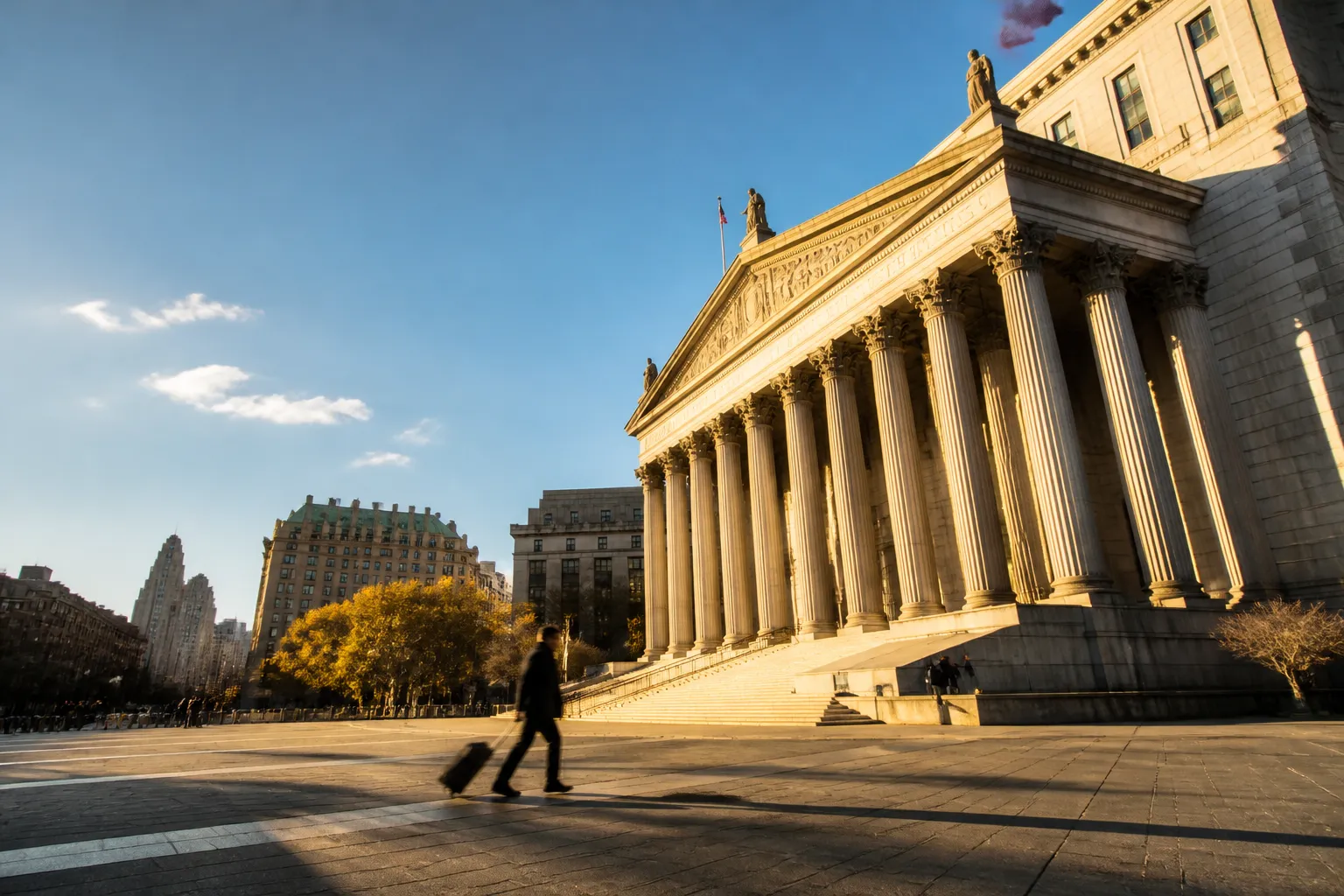
When a borrower falls behind on a private student loan, collection calls and legal notices rarely come directly from the entity that originated the note. Instead, millions of dollars in education debt sit inside pooled investment vehicles known as securitization trusts. For years, the financial entities managing these trusts argued that passive holding companies exist outside the direct supervision of consumer watchdog agencies. A major federal court ruling shifted that balance, establishing that student loan trusts can be held directly accountable under federal consumer financial protection laws.
What the CFPB case was about
The regulatory dispute centers on the National Collegiate Student Loan Trusts, a collection of fifteen special-purpose Delaware statutory trusts formed to hold and securitize more than 800,000 private student loans. The Consumer Financial Protection Bureau initiated its investigation back in 2014 by issuing civil investigative demands to each trust. The inquiry sought detailed records regarding collection lawsuits filed against borrowers who had defaulted on their student loans.
On September 18, 2017, the Bureau filed a formal complaint in federal district court alleging deceptive and unfair acts under the Consumer Financial Protection Act of 2010. The Bureau's action asserted that the trusts, working through a network of contracted servicers, special servicers, and subservicers, engaged in unlawful debt collection and litigation practices. According to CFPB enforcement findings, these practices included filing collection lawsuits without valid legal documentation proving loan ownership and submitting inaccurate affidavits to secure court judgments against consumers.
Related regulatory scrutiny extended into daily servicing operations. A separate enforcement action targeted both the trusts and the Pennsylvania Higher Education Assistance Agency, operating commercially as American Education Services. PHEAA served as the primary loan servicer for the trusts starting in at least 2006. That proceeding addressed systemic breakdowns in handling borrower accounts, including failures to properly process and respond to borrower servicing requests and emergency relief applications during the COVID-19 pandemic.
Why the Third Circuit's ruling matters
The core legal battle turned on whether passive financing entities can face regulatory enforcement for actions carried out by contracted third parties. The Structured Finance Association maintained that securitization trusts and fixed-income investors function strictly as passive vehicles with no direct role in debt collection or loan servicing, arguing they fall outside the statutory definition of covered persons. The trusts argued they had no employees, exercised no operational control over collection activity, and simply held loan titles for institutional investors.
The United States Court of Appeals for the Third Circuit rejected that defense on March 19, 2024. As detailed in legal analysis by Dechert LLP, the appellate court ruled that securitization trusts holding student loans qualify as covered persons subject to the Bureau's investigative and enforcement authority. The judges based their decision on the specific operational terms within the governing trust agreements. Because those agreements explicitly authorized the trusts to engage in activities related to owning and managing the loan portfolios, the trusts could not shelter behind their contracted agents.
A parallel analysis from Mayer Brown notes that the ruling establishes significant regulatory exposure for secondary market participants. The Third Circuit made clear that delegating day-to-day administration to independent contractors does not erase the trust's legal identity or insulate it from federal oversight. When collection agencies and law firms pursue borrowers on behalf of a trust pool, the underlying trust remains accountable under federal law for any unfair or deceptive practices used in recovering the funds.
How the case was resolved and what remains unclear
The litigation moved through prolonged procedural challenges before reaching a conclusion. Early on, the district court denied the Bureau's initial motion to approve a proposed consent judgment on May 31, 2020. The trusts later challenged the CFPB's standing by arguing that the statutory restriction on the President's power to remove the CFPB director rendered the agency's actions invalid, and that the Bureau failed to ratify the lawsuit before the statute of limitations expired. Both the district court and the Third Circuit determined the removal restriction was unconstitutional, but they severed that specific statutory provision and permitted the enforcement lawsuit to continue.
Stipulated final judgments were entered on October 1, 2024, followed by a modified stipulated final judgment on December 8, 2025. Public court records show minor differences across reporting bodies, with one regulatory tracker listing the modified judgment against PHEAA as dated December 2, 2025. The underlying CFPB lawsuit against the National Collegiate Student Loan Trusts reached its formal end when the parties filed a joint stipulation for dismissal with prejudice on April 25, 2025, leading the district court to terminate the litigation on April 29, 2025.
Despite the formal dismissal, practical questions remain for affected households. On January 2, 2025, the district court entered an order staying the borrower redress provisions of the trusts' judgment pending an appeal filed by institutional investor PIMCO. Public court documents omit the exact dollar figures for civil money penalties assessed against the parties, and published orders do not specify the precise remediation steps borrowers must take or what direct relief will be distributed once appeals conclude.
What borrowers can do when a collector contacts them
When third-party agencies reach out regarding delinquent education debt, verifying the caller's actual affiliation is essential. Official guidance from the Consumer Financial Protection Bureau on student debt collection clarifies that any collection agency pursuing a private student loan does not work for, represent, or collect on behalf of the U.S. Department of Education or any other federal department. Misrepresenting private loan recovery as an official federal enforcement action is a serious red flag.
Private student loans operate under contract terms distinct from federal direct loans. In default, private loans carry no standard statutory relief programs, income-driven repayment plans, or mandatory administrative discharges. The CFPB notes that standard settlement pathways do not exist for private student debt beyond paying the balance due, though borrowers can often negotiate lump-sum settlements or informal payment plans directly with the current loan holder. Consumers dealing with aggressive collection efforts can protect their position by taking practical steps:
- Request verification in writing detailing the current owner of the note, the servicer, and an itemized balance sheet accounting for all interest and fees.
- Ask whether the servicing rights have transferred, since private loans held in securitization trusts frequently change administrative hands across subservicers.
- Send written notice immediately if you believe you do not owe the balance, or use sample CFPB dispute letters to establish clear contact boundaries.
- Document every phone call, letter, and electronic communication, keeping copies of all payment histories and correspondence in an offline file.
Ignoring contact from a collection agency will not stop ongoing collection efforts or prevent lawful legal action if the underlying balance is valid. At the same time, collectors remain strictly prohibited from making false claims, using harassing language, or threatening legal maneuvers they have no standing to pursue. Understanding who actually owns the underlying loan helps borrowers navigate communications calmly and hold collectors to federal standards.
Please seek a professional. This article is general information, not financial, tax or insurance advice. Please seek a licensed financial, tax or insurance professional about your own situation.


