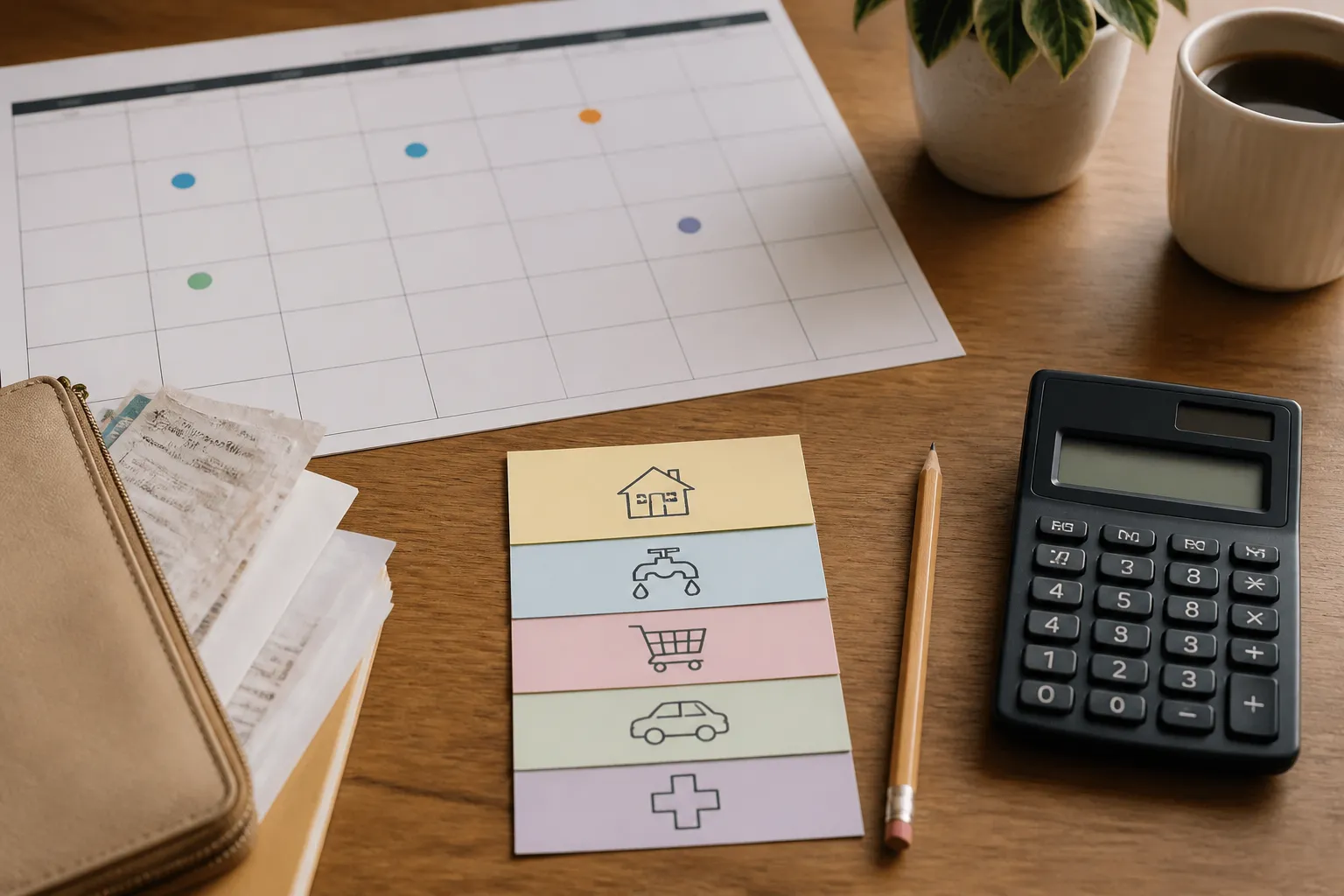
On October 31, a household might have enough money to cover November on paper and still worry about the rent due tomorrow. The missing detail is often timing. A first budget can start with the last 30 to 60 days of bank and credit card statements, then add something those records cannot show: the dates when next month’s money needs to be available.
A monthly total tells you how much. A calendar tells you when.
Before November Starts: Record What Actually Happened
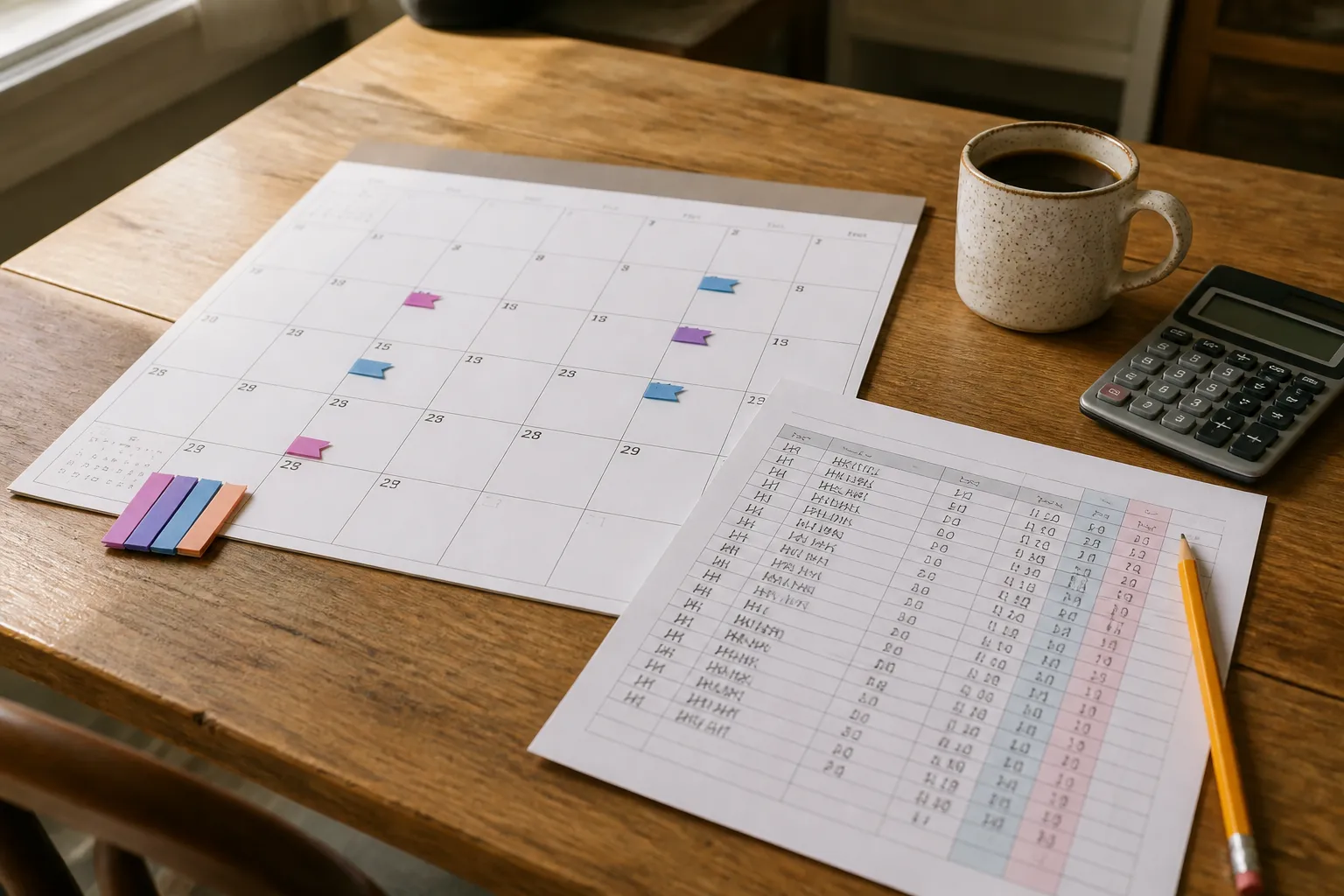
Imagine a household sorting September and October statements at the kitchen table. Rent is easy to recognize. Groceries take longer because they appear in a dozen transactions. Then come the small purchases: parking, a replacement charging cable, and a school activity fee. None seems large alone. Together, they explain why the account balance fell faster than expected.
The Consumer Financial Protection Bureau recommends building an “as-is” budget based on actual spending, including a miscellaneous category. That means the first pass records what happened, before deciding what ought to change. A restaurant total that feels uncomfortable is still useful information.
A practical starting point is one or two complete months of statements from every account used for household spending. Group purchases into a manageable set of categories, such as housing, groceries, transportation, eating out, and personal spending. Receipts or a notebook can fill in purchases made with cash. If a cash withdrawal’s purpose is unclear, mark it for review rather than assuming it all went toward groceries.
Credit card records need special care. When card purchases are counted in spending categories, counting the checking-account payment for those same purchases as another expense would count them twice. Existing card debt still needs a payment line in the forward-looking plan. The distinction is between recording purchases and planning the cash needed for payments.
Reflection prompt: Which category surprised you because of the number of transactions, rather than the size of any single purchase?
On Payday: Use Money That Actually Arrives
The income side starts with take-home pay, after taxes and payroll deductions. A salary figure does not show how much reaches the checking account. Statements can help identify deposits, but transfers between a household’s own accounts should not be mistaken for new earnings.
Pay frequency matters. For someone paid every two weeks, multiplying one regular paycheck by 26 and dividing by 12 gives a monthly average. For example, a hypothetical $1,200 biweekly paycheck averages $2,600 per month. Most months, however, contain only two of those paychecks, or $2,400. The average helps describe the year; the actual deposit dates help plan November.
Income that changes with shifts, contracts, or seasonal work needs a cautious estimate. Two months of statements may reveal spending patterns without showing the full range of earnings. A lower recent month or a conservative average over a longer period can provide a starting point, with the uncertainty kept visible.
On the calendar, write the expected deposit amounts on their arrival dates. Keep uncertain income separate from money already received or reliably expected. That makes the plan easier to read when a bill comes due.
Before Each Bill: Separate Amounts From Due Dates
Next, list recurring obligations with both an amount and a due date. Rent, loan minimums, insurance, phone service, and childcare may be fairly predictable. Utilities can vary even though they arrive regularly. For those bills, the recent statement provides an estimate, not a guarantee.
Consider a household with a bill due November 5 and its next paycheck arriving November 6. A monthly budget might show enough income overall. The calendar exposes a one-day gap. Money available at the start of the month matters, so the plan needs an opening balance as well as future deposits.
Variable spending needs room between those dates. Groceries, fuel, transit fares, and personal purchases continue while the household waits for payday. After accounting for recurring obligations and planned savings, the remaining income shows how much room is available for these categories. If the proposed totals exceed that amount, the draft does not yet balance.
Thirty to 60 days is also a limited window. Before treating the draft as complete, scan the coming calendar for known expenses missing from those statements. A recent record is evidence of spending, not proof that every future bill is included.
Every Week: Compare the Plan With the Account
A short weekly check can catch a mismatch before month-end. Pick a repeatable point, perhaps Sunday evening, and compare new transactions with the category amounts. Include recent purchases that have not yet appeared on a statement so the budget does not depend on an outdated balance.
Suppose the household planned $500 for groceries and has spent $310 by the middle of November. The useful question is what remains: $190, along with the meals and shopping trips still ahead. That detail gives the household something concrete to review.
When a category runs over, the cause matters. A larger-than-usual grocery trip may supply food for several weeks. Repeated takeout purchases tell a different story. An unrealistic estimate needs revision; a spending pattern may call for a change. Simply raising every limit without checking total income leaves the shortfall unresolved.
If projected expenses exceed income, discretionary purchases are one place to examine first. Recurring costs may also need review, though changes can take time. A plan with no money left has no margin for an overlooked purchase. A negative remainder shows an explicit gap.
At Month-End: Keep the Method Simple Enough to Repeat
At the end of November, place planned and actual amounts side by side. Identify the biggest differences and carry those lessons into December. The consumer.gov budget worksheet provides a straightforward format for recording income and expenses. A notebook or spreadsheet can serve the same basic purpose.
The Oregon Division of Financial Regulation describes budgeting as a written plan that includes priorities, estimated income and expenses, tracking, and adjustment. The adjustment belongs in the process. A first draft built from statements will still need information from daily life.
Keep the categories detailed enough to explain the money, but simple enough to maintain. If sorting purchases takes so long that the household stops doing it, fewer categories may be more useful. The essential record is income, spending, upcoming obligations, and what remains.
Reflection prompt: What would make next month easier to see, a more realistic grocery estimate, a clearer payday calendar, or a regular ten-minute check-in? The answer gives the next draft a specific job. The statements supply the history. The calendar turns that history into a working plan.
Please seek a professional. This article is general information, not financial, tax or insurance advice. Please seek a licensed financial, tax or insurance professional about your own situation.