A credit report and a credit score are connected, but they are not the same thing. Think of the report as the detailed file and the score as a number generated from information in that file. The distinction matters when reviewing credit information, comparing a score shown in one place with a score used elsewhere, or spotting an error before a major credit application. This guide reflects information available as of November 2, 2026.
Act I: The detailed record
What a credit report is
A credit report is a statement of credit activity and current credit situation. It can include the payment history and status of credit accounts that have been reported about a consumer. Credit reporting companies, also called credit bureaus or consumer reporting agencies, compile these reports. The three largest nationwide companies are Equifax, Experian, and TransUnion.
The report contains the details that a single score cannot show. For example, a report may show multiple accounts, their reported balances, payment history, and whether an account is open or closed. A lender reviewing an application can use this underlying information alongside a score. The Consumer Financial Protection Bureau explains the distinction in its overview of credit reports and credit scores.
Accuracy is central because a report is built from information furnished to credit reporting companies. The CFPB says reviewing reports at least once a year can help identify errors that could affect a score or access to credit. Requesting a consumer's own report does not hurt that consumer's credit score, according to the CFPB's credit reports and scores guide.
Myth check: Looking at your own report lowers your score
That is not supported by the CFPB guidance. A request for your own credit report does not hurt your score. The report review is a way to see the information that may feed into scoring models and lending decisions.
What a credit score is
A credit score is a number calculated from information in a credit report. It is designed to predict how likely someone is to repay borrowed money on time. Banks, card companies, and other businesses may use scores as one input when estimating repayment risk.
Many scores use a 300 to 850 range, but there is no single universal score range or universal score for every person. A score may vary based on the credit reporting agency whose data is used, the scoring model, the type of credit product involved, and the date the score is calculated. A score displayed to a consumer can differ from a score used in a lending decision.
The CFPB identifies several broad categories of report information that can affect a score: the number of credit accounts, how long accounts have been held, how close reported balances are to credit limits, and the frequency of late payments. The agency's credit score explainer also notes that paying bills on time has the greatest impact on a score.

Act II: How the record becomes a decision
How reports and scores work together
A score can give a quick summary, while a report provides the details behind that summary. In a credit decision, a lender may consider both. The CFPB says lenders can use credit reports and scores when deciding on a mortgage, auto loan, credit card, or another credit product, as well as when setting terms such as an interest rate.
That is why a score alone may not answer every question. Two people can see similar scores while having different account histories in their reports. Also, a score change does not automatically identify the precise report item behind it. Reviewing the record can provide more context than a number by itself.
- First, credit information is reported to a credit reporting company.
- Next, that information may appear in a consumer's credit report.
- Then, a scoring model can calculate a score from the report information available at that time.
- Finally, a business may use a score, report information, and other factors in its own decision process.
The order explains why report errors can matter. Incorrect information in the underlying record may affect a score artificially. The CFPB says that can potentially affect the terms a consumer receives. Its guidance encourages checking reports and addressing errors well before applying for credit.
Why one person can have more than one score
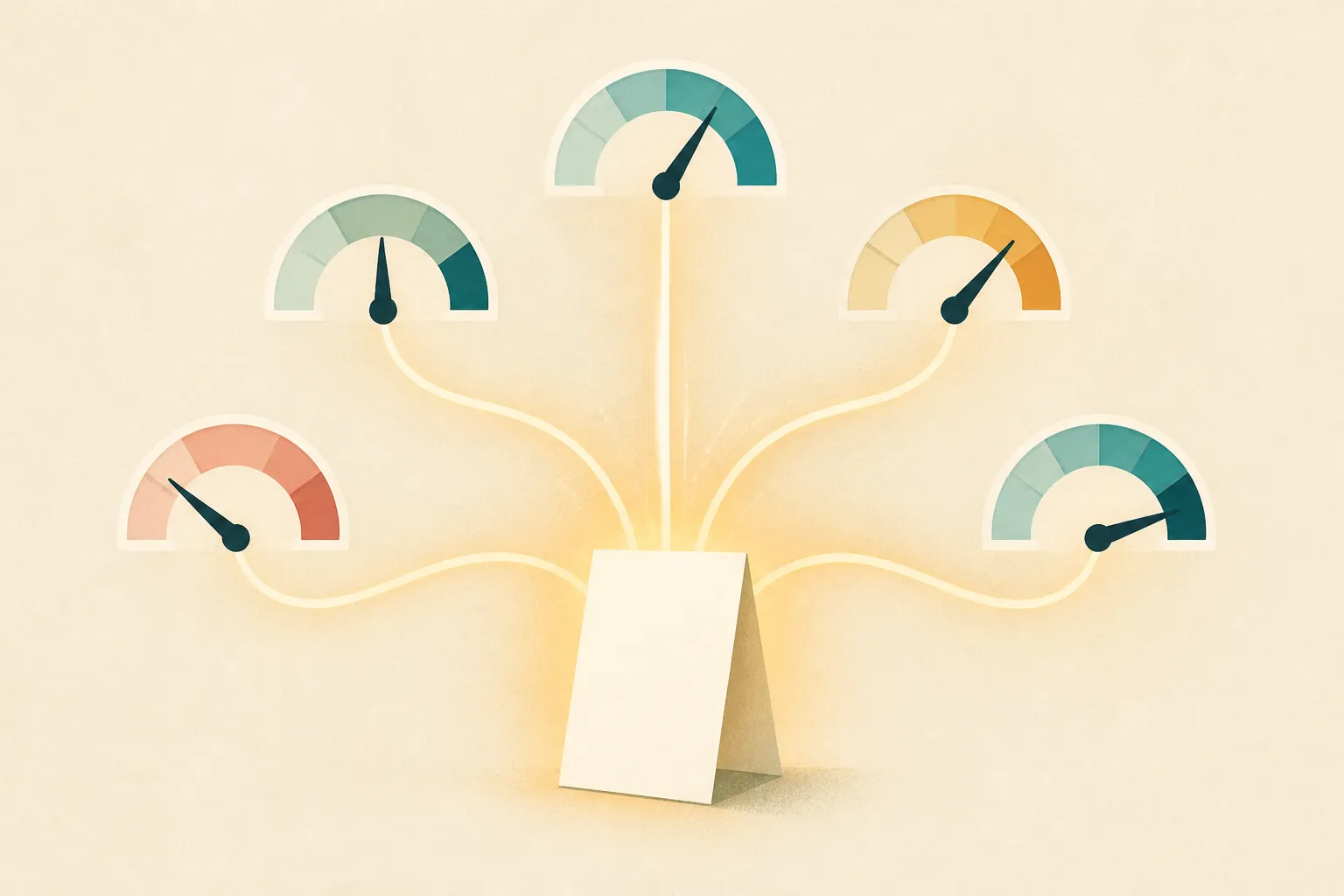
“What is my credit score?” sounds like it has one fixed answer. In practice, a person can have many scores. One score may use information from one nationwide credit reporting company, while another uses a different company's information. Different scoring models can also interpret report data differently, and some models are tailored to particular kinds of credit decisions.
For that reason, a score associated with a card offer may differ from a score used for a home loan or auto loan. Scores can also change as the underlying report changes or as time passes. A difference between two scores is not, by itself, proof that either score is wrong.
Questions that make a score easier to place in context
- Which credit reporting agency's information was used?
- Which scoring model produced the number?
- Was the score designed for a particular type of credit decision?
- When was the score calculated?
These questions help separate the number from the record behind it. They also explain why comparisons between scores can be imperfect when the source, model, or timing differs.
Limits of the credit picture
Some consumers do not have enough reported credit history to produce a traditional score. The CFPB has described consumers with no history at the three nationwide credit reporting companies as credit invisible. It also describes unscorable files, including thin files with limited information and stale files without recent activity.
The figures often cited on this topic need context. The CFPB reported 26 million credit-invisible consumers and another 19 million consumers with unscorable files, based on a 2015 report. Those statistics remain useful for explaining the issue, but they are not current population estimates.
Credit monitoring is another area where definitions help. The CFPB describes it as a commercial service that charges a fee to watch credit reports and alert consumers to changes. A monitoring alert is different from reviewing the full report, and a service alert is not a substitute for checking the underlying information.
A practical reading checklist
When reading credit information, start with the report and then place the score in context. Look for account details, reported payment history, balances, and status information in the report. Then note the score's source, model, product type, and calculation date. This creates a clearer trail than treating one number as a complete financial profile.
For official consumer education, the CFPB maintains resources on credit reports and scores, including information about errors and score factors. The central takeaway is simple: the report is the detailed record, and the score is a calculation based on that record. Both can matter, but they answer different questions.
Please seek a professional. This article is general information, not financial, tax or insurance advice. Please seek a licensed financial, tax or insurance professional about your own situation.