
A credit report can still list a debt after a bankruptcy discharge, and the balance shown may not match your records. Treat that as a credit-reporting dispute. Check the details, explain the error in writing, and send copies of your records to the right parties.
Start by identifying the exact error
Get a current copy of the report that shows the account. Note which credit reporting company issued it, how the account is labeled, and what balance and other details it lists. Then compare the entry with your own records. Be specific about what looks wrong. A reported balance is a concrete target. A general statement that the debt was discharged is not.
A discharge and a credit report entry are related, but they are separate things. A report can keep showing an account after discharge. The sources reviewed for this article do not say what balance a discharged debt should show. They also do not say which bankruptcy document would prove a balance is wrong. So do not assume the number must be zero. Point to the detail you can show is inaccurate, and attach the records that back you up.
The Consumer Financial Protection Bureau (CFPB) says you have the right to dispute errors on your credit report. Its credit report dispute guidance lays out the basic process. It does not describe a special procedure for debts included in a bankruptcy.
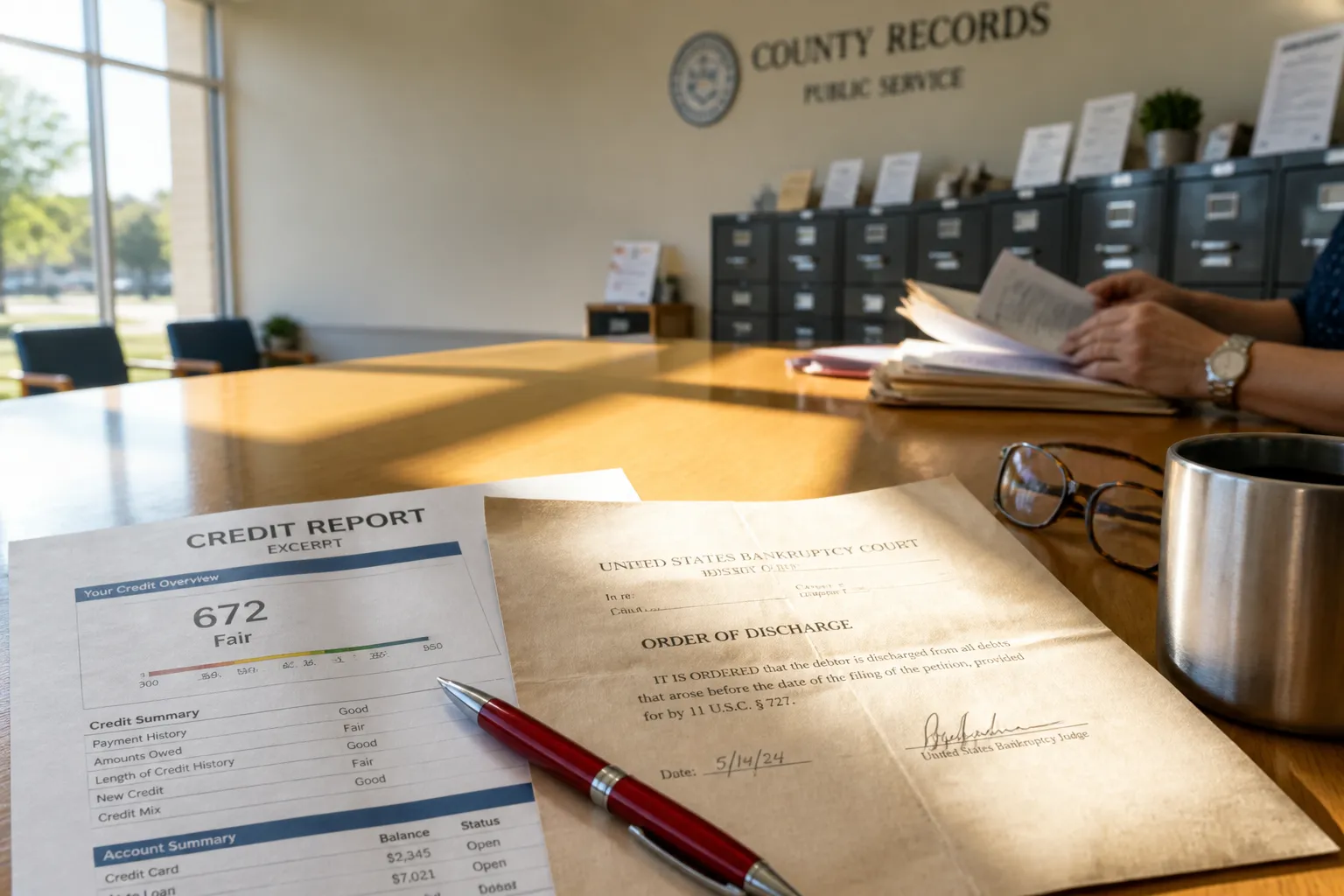
Send the dispute to the bureau and the furnisher
For a typical credit report error, the CFPB says fixing it generally means contacting both the credit reporting company and the company that supplied the information. The three nationwide credit reporting companies are Experian, Equifax, and TransUnion. The furnisher is the creditor or debt collector that reported the account. Check every report, because the account may not appear on all of them.
Start with the credit reporting company. Send a written dispute to each one that shows the entry. Federal Regulation V (12 CFR Part 1022) separately covers furnisher duties. Subpart E includes rules on reasonable policies for accuracy and integrity, and on direct disputes. The direct disputes rule, section 1022.43, is the place to read how a dispute made straight to a furnisher is handled. This article does not summarize its requirements, so read the text before relying on any step.
Keep the two contacts separate in your records. Write down the date, the organization, the account, and what you sent. A dispute sent to one party should not be treated as if it notified the other.
Build a clear written dispute
A letter gives you room to name the account and explain the mismatch. The CFPB says to include your complete name, address, and telephone number. Add the credit report confirmation number if you have one. List each item you dispute, give the account number for any disputed account, and say plainly what is wrong and why.
Ask for the change you want, such as a corrected balance or removal of the entry. Attach a copy of the disputed part of your report and circle or highlight the items in question. Send copies of your supporting documents, never originals. Keep a full copy of the letter and everything attached.
If you have bankruptcy paperwork that bears on the dispute, consider including a copy. The sources do not say a discharge order is required or that it will produce a particular fix. So tie each document to the specific detail you are challenging. Do not expect the reader to work out the link.
The CFPB says you can send the letter by certified mail with a return receipt, which gives you a record that it was received. It also offers instructions and a template letter. A CFPB sample credit reporting letter is listed as a reference, but the copy reviewed here was not readable. Open it yourself before you rely on it.
- Identify the credit reporting company and the account entry.
- State the exact balance or detail you believe is wrong.
- Explain why, and ask for a correction or removal.
- Attach marked report pages and copies of supporting records.
- Keep copies of what you sent and any proof of delivery.
Track the response and know the limits
Keep every record together after you send the dispute. The CFPB page reviewed here explains how to submit one. It does not cover investigation timelines, how outcomes are decided, or what to do if you disagree with the result. It also does not address costs or any effect on a credit score. Do not assume a dispute will lead to a specific correction.
If you do not recognize the account at all and think identity theft is behind it, the CFPB points to IdentityTheft.gov, the federal government's resource for reporting and recovering from identity theft. That is a different problem from a wrong balance on an account you know. The sources do not name other agencies that take complaints about a bankruptcy-related entry.
This article is educational only and is not legal, financial, or tax advice. Bankruptcy histories can involve details that general guidance does not reach. If your facts are tangled, or you are unsure which records to send, consider talking with a qualified professional. The practical core is simple. Name the error, back it with copies, and log every contact.
Please seek a professional. This article is general information, not financial, tax or insurance advice. Please seek a licensed financial, tax or insurance professional about your own situation.