











You open your statement and see the same coffee-maker order twice, same merchant, same amount, two days apart. Your stomach drops a little. Take a breath. A double charge is a common billing problem, and there is a defined process for it. The catch is that the process has a clock, and a phone call alone may not start it.
A phone call starts the conversation. A written notice is what federal billing error rules actually ask for.
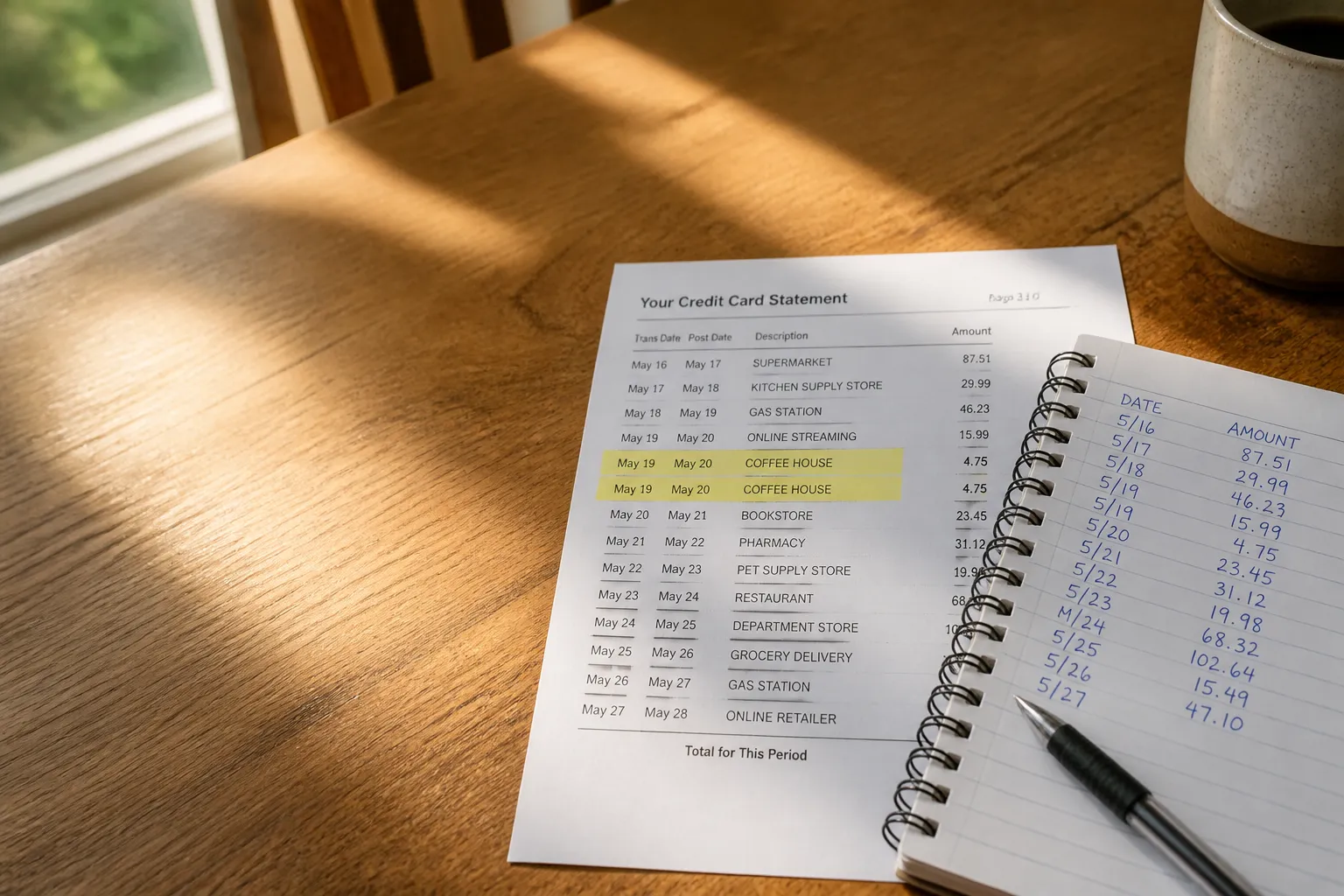
Confirm you are looking at a duplicate charge
First, check that both charges have actually posted. A pending authorization can look like a second charge, but it may drop off or change before it settles. Capital One's help center notes that pending transactions generally cannot be disputed for that reason. If one line says pending, give it a few days.
Next, sort out which kind of problem you have. A double charge is a dispute: you meant to buy something, but the transaction was processed wrong. A fraud claim covers a charge you never made at all. Picking the right category helps the card company send your claim to the right place.
Then line up your paperwork. Pull the receipt or order confirmation and write down the merchant name, each amount, and each posting date. You will be asked for those details, and having them ready saves a round of back and forth.
Try the merchant first, then file with the card company
Merchants often fix this quickly. A reversed charge from the merchant can end the problem before any formal dispute starts. Ask for the second charge to be refunded, and write down who you talked to, the date, and what they promised. If they say the refund takes a few days, note that too, along with the date you will check again.
If the merchant stalls or says no, go to the card company. The CFPB advises calling right away and checking your card agreement for your rights. But here is the part people miss. Under the billing error rules, the formal notice generally has to be in writing. So call, then follow up on paper. The FTC publishes a sample dispute letter that can help you organize what to say.
Use whichever channel your issuer lists, whether that is an app, a website, a phone line, or mail, and note which one you used. If the issuer's online form is not clearly a written billing error notice, a mailed letter to the billing error address on your statement may be the safer paper trail. Check your statement for that address.
Meet the written notice deadline
The number to remember is 60. Under Regulation Z, the written notice generally must reach the card company within 60 calendar days after the statement that first showed the charge. Count from that statement, not from the day you spotted the problem. Read the rule yourself at the CFPB's billing error resolution page.
Picture two people. One notices the double charge on day 5 and mails a letter that week. The other notices on day 70 and calls. The first has a clear paper trail inside the window. The second may have lost some of the formal protections, though Capital One says it may still help after 60 days. Treat that as a possible courtesy, not a guarantee.
After the company receives your written notice, it generally has 30 days to confirm it got the dispute, unless it finishes resolving the matter by then. Full resolution can take longer. Capital One says up to 90 days. Keep proof of when you mailed or submitted the notice.
Keep records and understand the outcomes
Build one file. Put in copies of every notice, short notes on each follow-up call with dates, and the receipts, invoices, tracking details, and merchant messages. It feels like overkill until someone asks you a question you answered three weeks ago.
The CFPB explains the two endings. If the company agrees you were right, the duplicate charge must be removed. If it decides you were wrong, it must explain why in writing, say how much you owe, and give a payment due date.
- Paying the disputed amount does not forfeit the dispute, but refunds usually wait until the company decides in your favor.
- Ask whether interest or fees on the disputed amount will be reversed. The sources do not spell out the answer.
Because the cost of waiting is unclear, a lot of people sort out the payment question by reading their card agreement and asking the issuer directly.
Questions the sources do not fully answer
Some pieces are still open. The sources reviewed do not say whether every duplicate merchant charge is handled as a billing error under federal rules, or how card network chargeback timelines compare with the Regulation Z process. They are related, not identical. Credit bureau explainers such as Experian's chargeback overview cover the chargeback side.
Debit cards follow different rules, and the material here does not walk through that process. Check with your bank and a consumer protection agency for debit-specific guidance.
Finally, the sources do not explain how a disputed charge may show up on a credit report or affect a score, and they do not describe next steps if a dispute stalls, such as complaining to a regulator. Those are worth researching on official consumer sites before you need them. This article is educational only, not advice for your situation.
Please seek a professional. This article is general information, not financial, tax or insurance advice. Please seek a licensed financial, tax or insurance professional about your own situation.


