











An inaccurate mark on your credit report can throw off household cash flow without warning. A balance you already cleared or a late fee you never owed can push up interest rates on a future auto loan, raise insurance premiums, or stall a rental application. Most consumers start by contacting the credit reporting bureaus, Equifax, Experian, or TransUnion, but federal rules also give you the right to challenge the bad data directly with the company that supplied it.
When an inaccurate account status appears across multiple bureau files, going straight to the furnisher requires the business that created the record to examine its own billing logs.
Understanding the Two-Party Dispute System
Fixing an erroneous credit entry involves two distinct types of entities. The first is the credit reporting company, which packages your borrowing history into files sold to lenders. The second is the company that sent the data to the bureau in the first place, known formally as the information furnisher. Furnishers include retail credit card issuers, auto lenders, mortgage servicers, utility providers, and collection agencies.
Many consumers do not know whether a reporting mistake came from a transmission glitch at the bureau or bad recordkeeping at the furnisher. Guidance from the Consumer Financial Protection Bureau notes that you may need to send a dispute letter to both the furnisher and the credit reporting company. Disputing with both entities ensures each party opens an inquiry into its records, creating a clear audit trail if the error remains uncorrected.
Gathering Records Before You Write
A direct dispute succeeds or fails based on documentation. Before drafting your notice, assemble the exact paperwork showing why the furnisher’s entry is incorrect. Pull your recent credit report, note the report confirmation number if one was assigned, and identify every specific account number tied to the problem.
Next, pull independent proof from your own household records. This might include canceled checks, digital bank transfer receipts showing an on-time payment, payoff letters from a closed account, or billing statements that contradict the balance reported. Always send clear photocopies and retain the original documents in your own files. The CFPB notes that if you suspect an inaccurate entry is the result of fraud or identity theft, you should visit IdentityTheft.gov to submit an official federal report and start a dedicated recovery plan.
Drafting the Direct Dispute Letter
A direct dispute to a furnisher must be clear, factual, and strictly focused on numbers and dates. Avoid emotional arguments about stress or ruined plans. State your full legal name, your current mailing address, your primary phone number, and the exact account number under dispute. Then explain, in plain sentences, what entry is wrong, why it is incorrect, and the exact correction or deletion you want made.
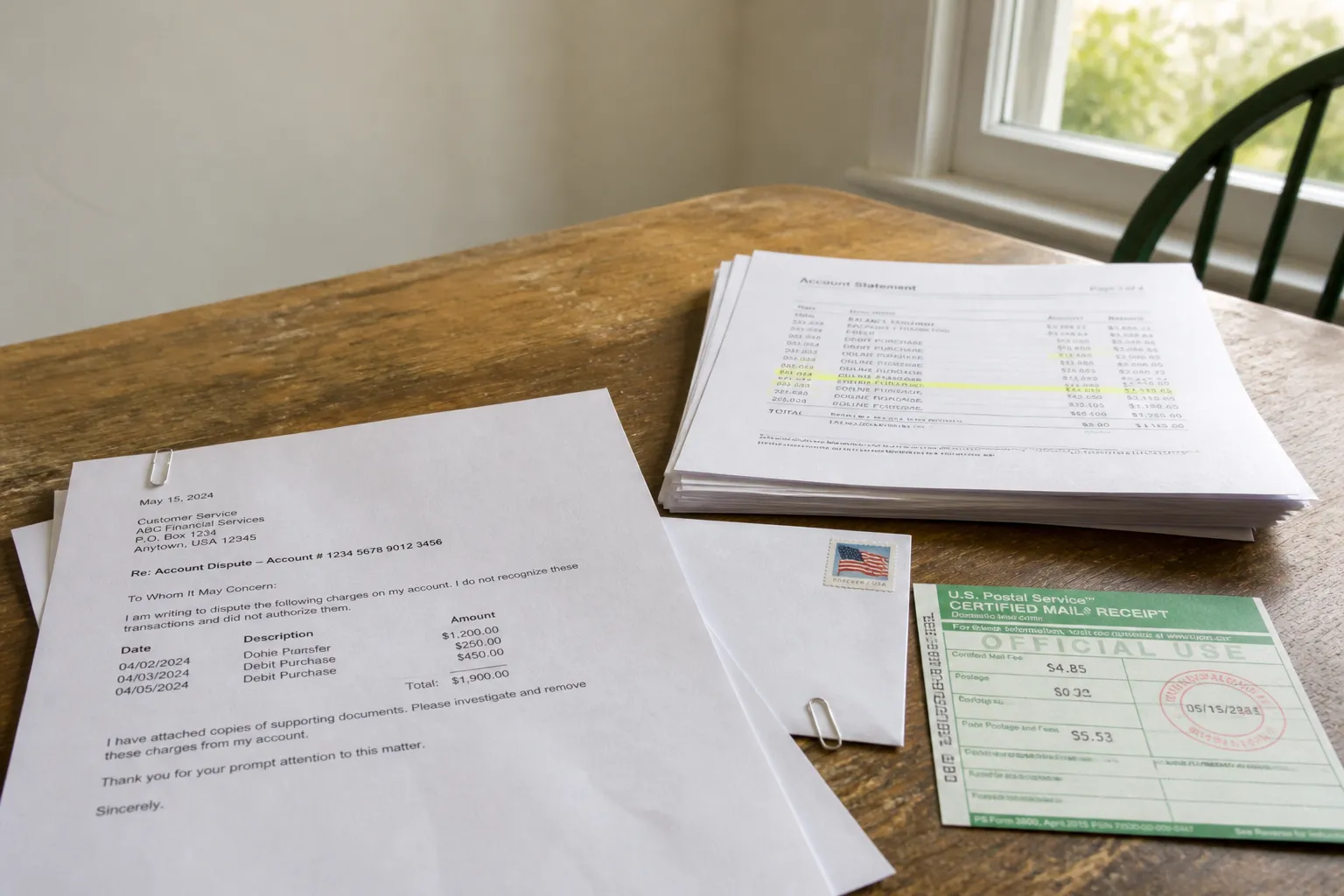
You do not need to create this document from scratch. Both the CFPB and the Federal Trade Commission offer free templates designed specifically for contacting furnishers. You can adapt the CFPB furnisher sample letter or review the FTC sample dispute letter for information providers. If you have multiple errors with the same furnisher, itemize each one separately. Attach a copy of the disputed page from your credit report, circle the incorrect line items, and list your supporting attachments clearly at the bottom of the page.
Mailing Your Packet and Managing Deadlines
While some companies provide digital portals or customer service emails, sending a physical letter through certified mail with a return receipt requested gives you verifiable legal proof of delivery. This postal receipt records the exact day an employee signed for your package, establishing an official timeline for your records.
Keep a physical or digital folder containing a duplicate copy of your signed letter, every attached exhibit, the postal tracking number, and the signed delivery slip. Create a simple log sheet noting the date you mailed the packet and any telephone contacts or written responses you receive. Because mailing addresses for direct disputes can differ from regular payment processing addresses, check the furnisher’s official disclosures or consumer contact pages to ensure you use the proper address for billing inquiries and credit disputes.
Understanding the Investigation Timeline
When you file a formal dispute, credit reporting companies operate under specific statutory clocks. According to the CFPB, a credit reporting company generally must investigate a dispute within 30 days of receiving it. However, there are two key exceptions to keep in mind:
- The investigation can take up to 45 days if you filed the dispute after receiving your free annual credit report.
- The 30-day period can be extended by 15 days if you submit additional relevant supporting information while the investigation is already open.
Once the review concludes, the bureau has five business days to send you written notice of the findings, along with a free copy of your updated credit file if changes were made. This follow-up copy does not count against your standard free annual reports. Furthermore, if a furnisher acknowledges an error and updates its internal records, federal rules require it to notify every credit reporting company it supplied that incorrect information to, ensuring the fix is applied across your bureau files.
Spotting Warning Signs and Navigating Process Gaps
Managing credit report disputes takes patience and administrative effort, which makes consumers vulnerable to commercial shortcuts. According to FTC guidance on disputing credit report errors, consumers should watch out for companies that charge upfront fees while promising debt relief or promising to remove accurate information. No outside service has secret methods to erase genuine payment history. Disputing mistakes is completely free when you do it yourself.
Keep in mind that published regulatory guidance does not spell out internal furnisher workflows in detail, nor does it define exact steps for every situation where a furnisher rejects valid proof. If an inquiry stalls or a furnisher refuses to fix verifiable errors, consumers can submit a complaint through the CFPB complaint portal. This educational overview does not constitute legal, tax, or financial advice. When facing complex issues involving large balances or unresolved identity theft, speaking with an attorney or an accredited non-profit credit counselor can help you evaluate your options.
Please seek a professional. This article is general information, not financial, tax or insurance advice. Please seek a licensed financial, tax or insurance professional about your own situation.


