











A payment can be correct in your records and still appear late, unpaid, or duplicated after a mortgage account moves to a new company. If you spot an error, you have the right to dispute it. For a mortgage, check the transfer paperwork, contact the company servicing the loan, and dispute the inaccurate report with the credit reporting company and the business that supplied the information.
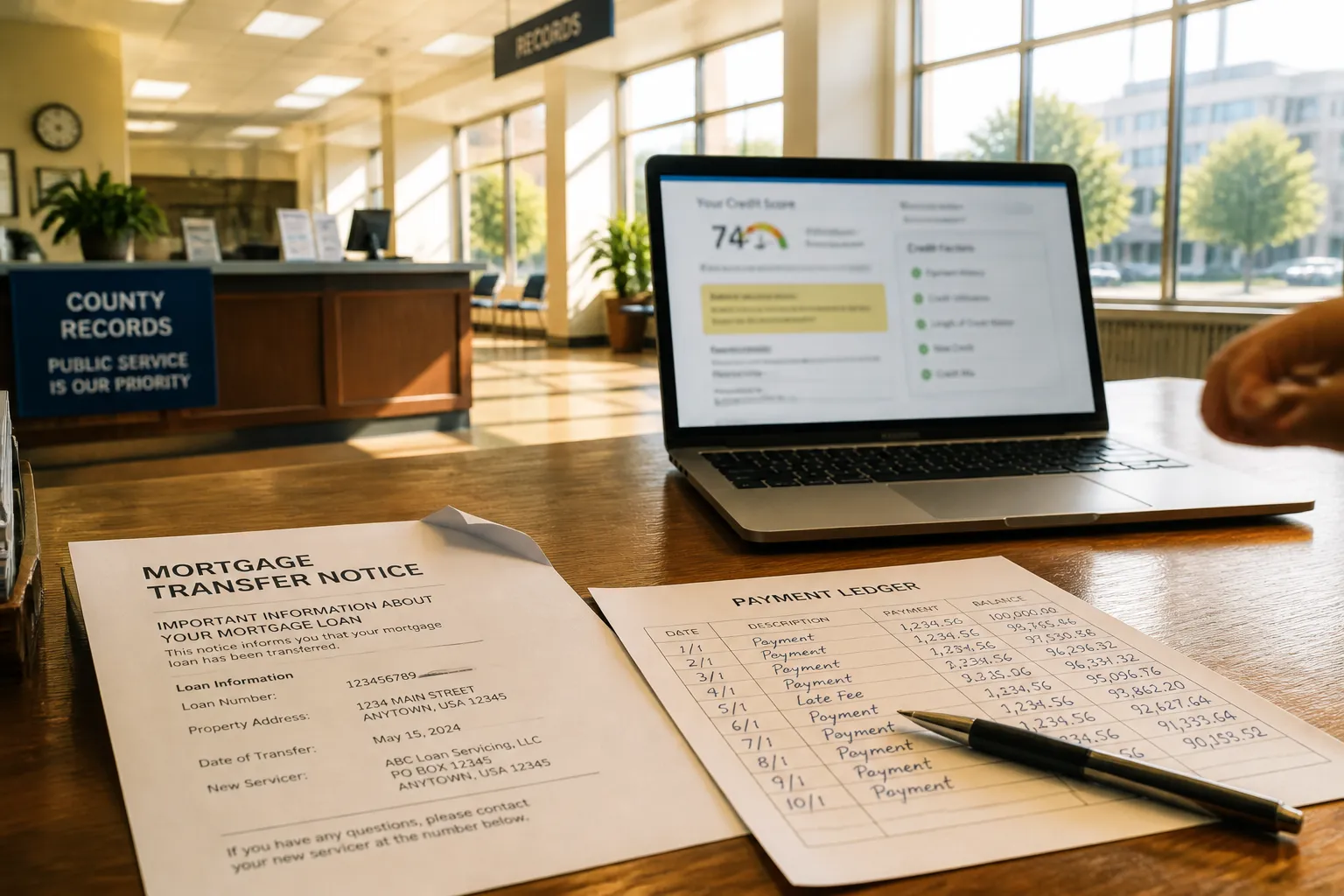
Why an account transfer can leave a reporting error
A lender merger or account transfer can involve several companies and records. A mortgage servicer is the company that collects payments and handles day-to-day account matters. It may be different from the company that owns the loan or the original lender. When servicing changes, payment history and account details also need to be handled by the new servicer. A mistake in that handoff could show up as a late payment, an incorrect balance, or what looks like two accounts for one loan.
The available federal guidance explains mortgage servicing transfers, but it does not spell out how a merger itself affects credit reporting or how a furnisher must correct every kind of merger-related mistake. These steps apply to credit report errors generally, with additional checks for mortgage servicing. For credit cards, auto loans, student loans, or other accounts, the transfer rules may differ.
First identify who is reporting the disputed information. Your credit report may show the company that supplied the data, while your transfer notice or mortgage statement identifies the current servicer. The owner, servicer, and original lender may not be the same company. Getting those roles straight helps you send each dispute to the right place.
Dispute the report and the information behind it
The Consumer Financial Protection Bureau says consumers can dispute errors with both the credit reporting company and the company that provided the information. You can contact the reporting company whose report contains the error, such as Experian, Equifax, or TransUnion, and separately write to the information provider. If the problem concerns a mortgage payment or balance, that provider may be the servicer handling the account. The CFPB explains the general process in its guide to disputing a credit report error.
Make the dispute specific. Say what entry is wrong, what you believe the correct information should be, and why. For example, identify the payment date and amount shown in your records, then explain how the credit report differs. Ask for the information to be corrected or removed, as appropriate. Avoid sending original documents, and keep a copy of every letter and enclosure.
A written dispute can include:
- Your full name, mailing address, and phone number.
- A report confirmation number, if one is available.
- Each disputed item and its account number.
- A clear explanation of the error and a request for correction or removal.
- A copy of the relevant report section, with the disputed item circled or highlighted, plus copies of records that support your explanation.
Certified mail with a return receipt can give you a record that the letter was received. Keep the mailing record, a copy of the dispute, and copies of the documents you sent. The sources cited here do not provide a dispute investigation deadline or explain what happens if a dispute is rejected, so do not assume a particular response date or outcome.
For a mortgage, contact the servicer
If the error is about a mortgage payment, balance, or account history, contact the mortgage servicer rather than assuming the loan owner is the right first contact. The servicer receives payments, applies them to the balance, and handles routine account questions. The CFPB says mortgage servicers must provide correct information without delays. It also describes a written statement that generally shows payment history, including partial or late payments and charges or credits, with exceptions for coupon books and some small servicers. See the CFPB’s overview of mortgage servicer requirements.
Check the transfer notice before sending payment records or questions. In general, the old servicer must send notice at least 15 days before the transfer, and the new servicer must send notice within 15 days after it, unless the notices are combined. The notice should identify the new servicer and explain when the old company stops accepting payments and when the new one begins. The CFPB explains these mortgage payment transfer notices.
Compare those dates with your payment records. Payments sent to the wrong servicer after notice may not be credited properly. If a payment appears missing, gather the bank or payment confirmation, the relevant mortgage statements, and the transfer notice. Ask the servicer to review the account history and explain any mismatch in writing. Federal mortgage servicing rules cover transfer and error-resolution procedures, but the available sources do not establish that a particular correction will be made or how quickly.
Build a clear record before you send anything
Use your own records to check the account timeline. Compare the last statement from the old servicer with the first statement from the new one. Note the payment dates, amounts, balances, fees, and any credits. Then compare those details with the entry on each credit report. A short timeline can make the issue easier to explain: when you paid, which company received the payment, when servicing changed, and what the report says.
Before mailing a dispute, ask yourself:
- Did I receive a transfer notice, and does it show when to send payments to the new servicer?
- Does my statement match my payment history, including any partial payments, late payments, charges, or credits?
- Have I identified the current servicer and the company that supplied the disputed report information?
- Do I have copies of supporting records and of everything I plan to send?
If you cannot resolve a mortgage issue on your own, a HUD-approved housing counselor, an attorney, or a legal services program may be able to help. Check a counselor through HUD’s official listings before sharing personal information. The National Consumer Law Center also discusses the roles of servicers and loan owners in its homeowner guide to mortgage payments.
Act promptly, and treat identity concerns carefully
Do not wait for a transfer-related entry to correct itself without checking. Mortgage problems can grow if they go unresolved, and prompt documentation gives you a clearer record of what you reported and when. This does not guarantee a particular credit report change or score result. The effect of an error on a credit score cannot be predicted from the sources available here.
If you think the entry may involve identity theft rather than a payment or transfer mistake, the federal government’s IdentityTheft.gov can help you report identity theft and make a recovery plan. The guidance reviewed here does not explain how to distinguish identity theft from a clerical error, so avoid treating uncertainty as proof of either cause. Be cautious with unsolicited offers to fix your credit. Check claims against official information from the CFPB or the Federal Trade Commission’s credit report dispute guidance before paying or sharing personal information.
Please seek a professional. This article is general information, not financial, tax or insurance advice. Please seek a licensed financial, tax or insurance professional about your own situation.


