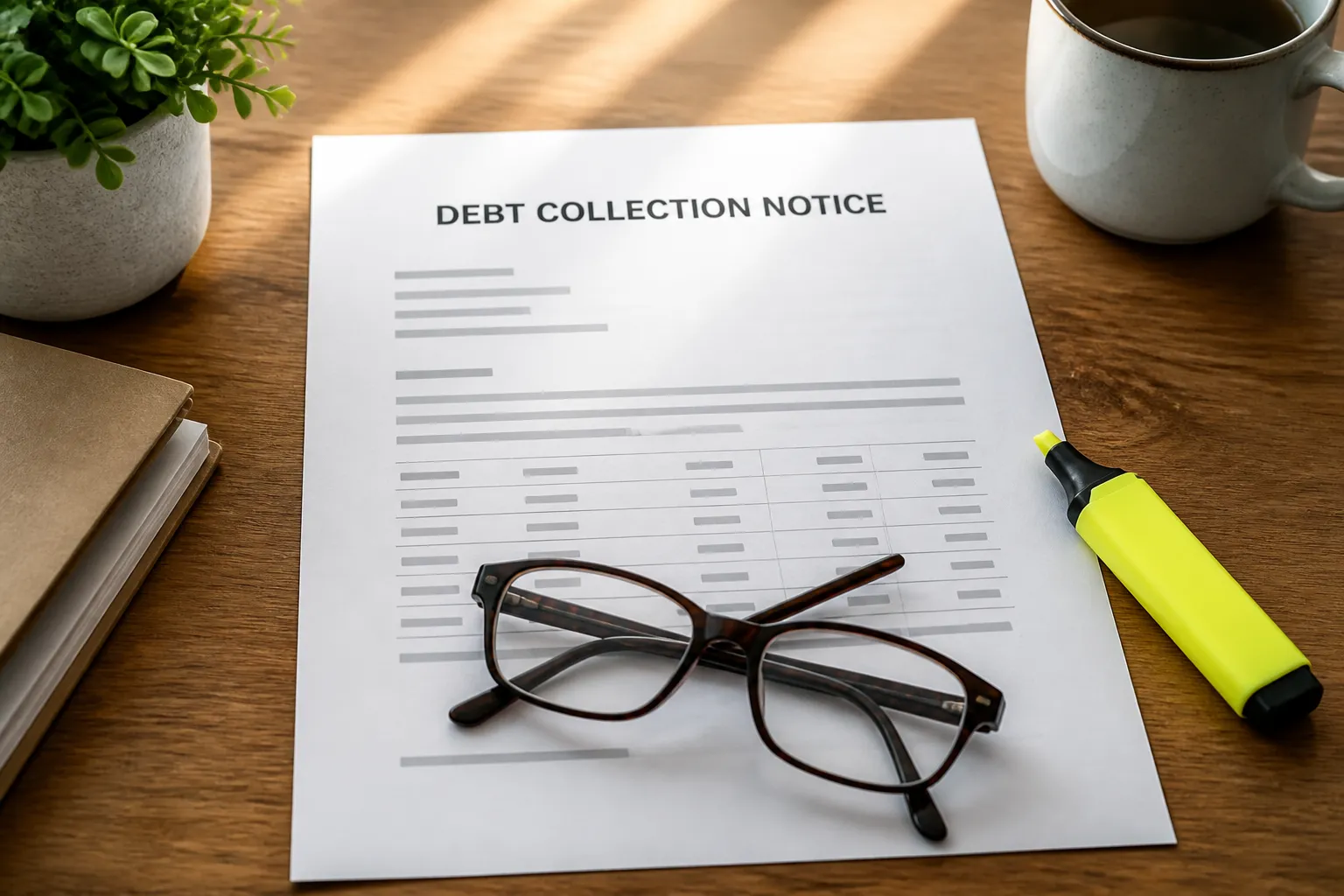
A debt collection notice can put several amounts close together: an earlier balance, changes to that balance, and the amount the collector says is owed now. Before trying to reconcile them, find the Itemization Table and read its labels. What date does it start from? Which amounts are listed as changes? Does the arithmetic lead to the stated balance? Those questions help separate what the notice shows from what you still need to check.
Find the notice’s starting point
A debt collection validation notice provides information about a debt under federal rules. The Debt Collection Rule implements the Fair Debt Collection Practices Act through Regulation F. The Consumer Financial Protection Bureau, or CFPB, includes an Itemization Table in its Model Validation Notice and publishes separate guidance about that table. Its Debt Collection resources link to those materials.
Start with the notice in front of you, rather than assuming every table will look the same. Identify the collector and any creditor named, the account reference, and the amount the notice says is owed. Then locate the table. Read the date and balance at its starting point before reading the changes below it. A later amount may be easier to understand once you know which earlier amount the notice uses for comparison.
The CFPB resource page is mainly for businesses working to comply with the rule. It points to the Model Validation Notice and Itemization Table guidance, but it does not give a consumer-facing explanation of every possible entry. If a label on your notice is unclear, treat the label as a question to verify, not as an explanation by itself.
Read each change as a claim you can check
Move down the table one line at a time. For each entry, ask: Does this increase the balance, reduce it, or leave that unclear? What period does it appear to cover? Is there a statement, payment confirmation, or other record that could help you check it? Write down the exact label and amount when something does not match your records. That is more useful than a general note that the total looks wrong.
Check the calculation separately from the reason for each charge or credit. The amounts might add up while one entry still needs an explanation. Or the entries might sound familiar while the final balance does not follow from them. A payment you remember making is another concrete place to look: find its date and amount in your records, then see how the notice accounts for it. A difference calls for more information; the table alone may not explain it.
The CFPB published Itemization Table guidance on October 29, 2021. Its resource page also links to the Model Validation Notice. Those are useful places to check what the model and guidance say, especially if a heading on your notice is hard to interpret. The page reviewed for this article does not reproduce that guidance’s text, so it cannot settle what a particular entry on your notice means.
Know what the public page leaves open
The CFPB lists frequently asked questions on validation information, released July 27, 2022, alongside separate FAQs on electronic communication and on unusual or inconvenient times and places. It also lists a Spanish translation of the Model Validation Notice, released October 18, 2021. These links can help you locate the relevant CFPB material. The resource page itself does not spell out what each line of an Itemization Table means.
That distinction matters when a notice raises a specific question. Does an unfamiliar amount represent a fee, interest, or something else? Why does the table begin on that date? Where is a payment you can document? The table may show figures without supplying enough context to answer every question. The sources reviewed here also do not establish a dispute deadline or explain what happens after a dispute. Do not infer a response period from the dates on the CFPB’s guidance page; those are publication dates, not dates on your account.
Keep the notice beside your records
Keep a complete copy of the notice, including any pages that explain its terms. If it arrived by mail, keep the envelope; if it arrived electronically, retain the message and attachments. Set it beside records you already have, such as statements and payment confirmations, and compare dates, account references, and amounts. Preserve the wording of any entry you cannot identify so you can ask a precise question later.
You do not need to resolve every line in one sitting. Make one pass to identify what the collector states, and a second to mark what your records support or contradict. For questions about a particular notice or your rights, a qualified consumer attorney or nonprofit credit counselor can help you assess the details. This article is educational information, not financial or legal advice.
Two passes through the table
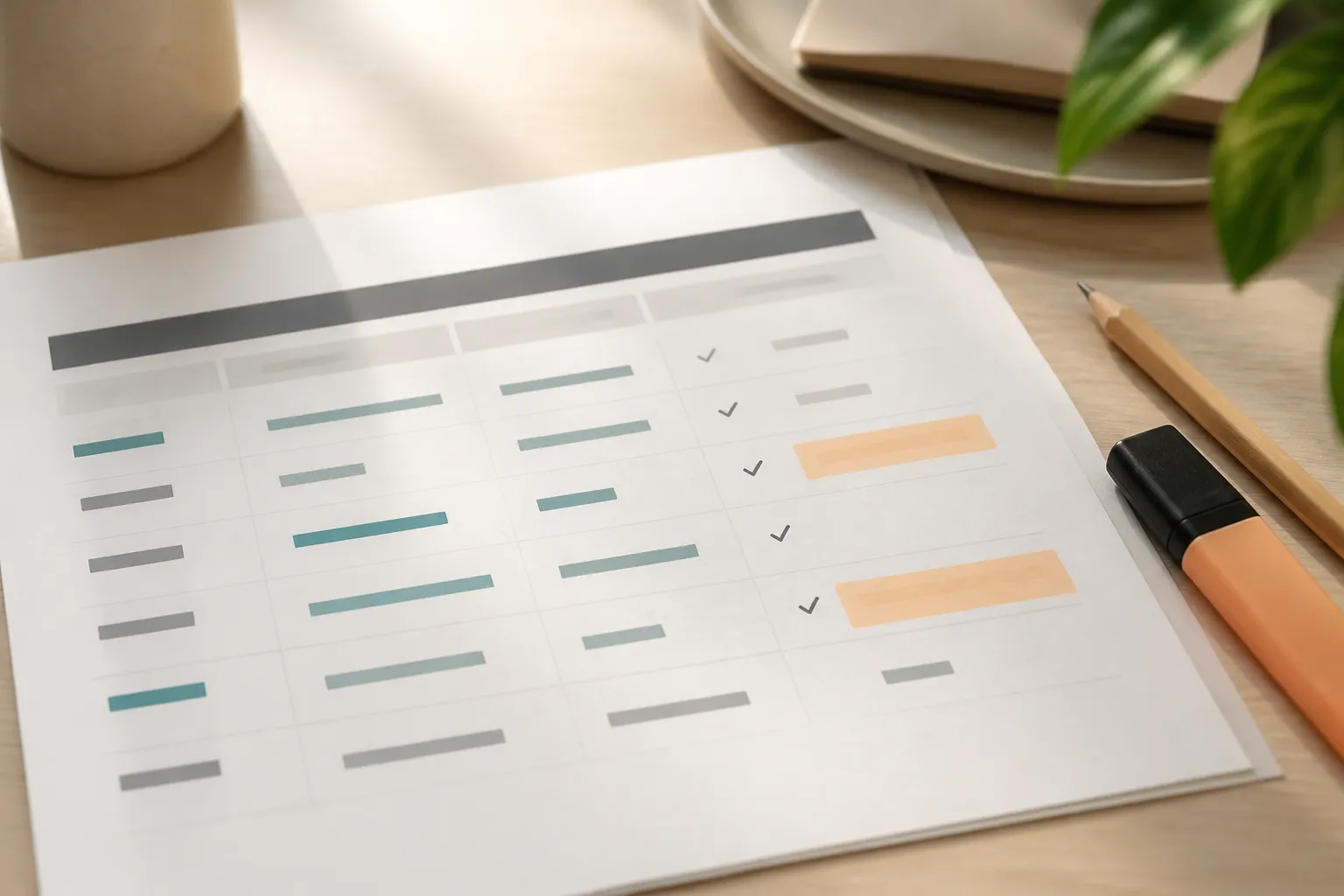
Keep those two passes separate. A table can tell you how the collector presents a balance without answering every question about it. Your notes give you a clear record of what the notice says and what remains unverified.
Please seek a professional. This article is general information, not financial, tax or insurance advice. Please seek a licensed financial, tax or insurance professional about your own situation.