










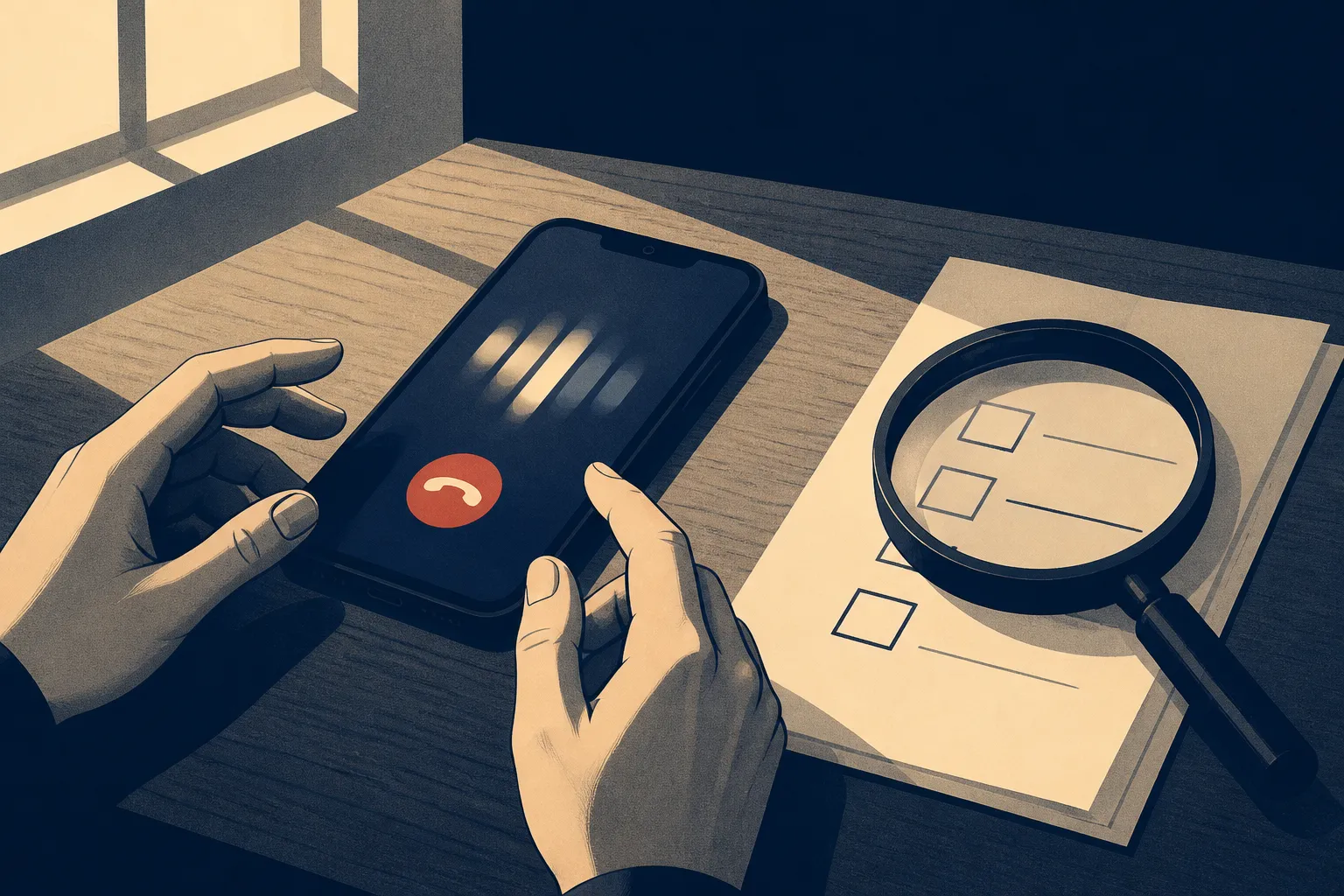
The call says it is the government. The number on your screen looks right. The voice is calm, then less calm. You owe money, or your account has a problem, and you have until the end of the day. This is the whole script, and it has worked for a long time because it skips your good judgment on purpose.
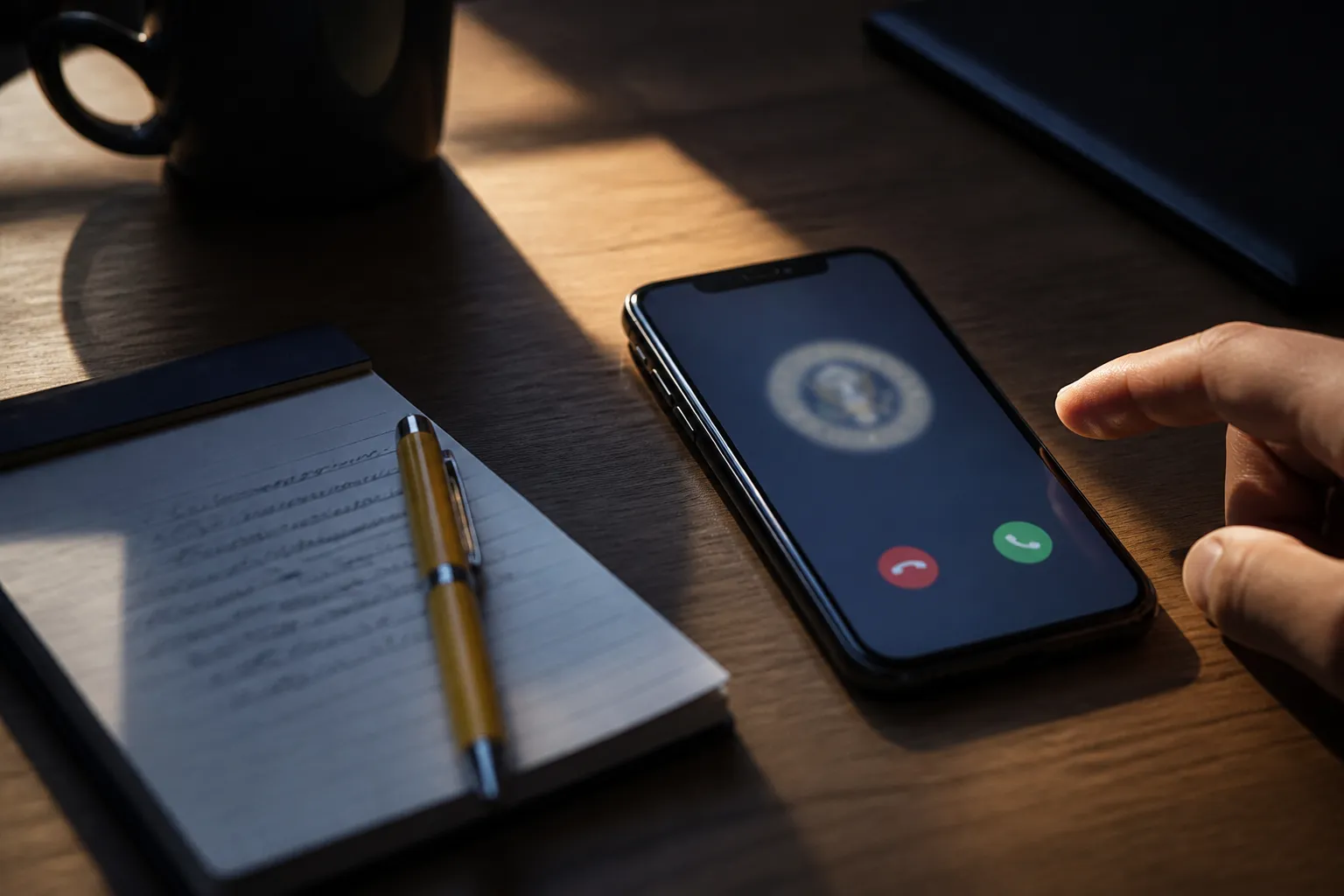
How Government Imposter Scams Work
Impersonators pretend to be from agencies such as the Internal Revenue Service or the Social Security Administration. The goal is trust. Once they have it, they go after your personal information or your money. Some also pose as a banking or business contact and say you owe a balance or your account has a problem (USAGov).
The ask usually falls into one of three buckets: send money, buy and send a gift card, or hand over personal details. Caller ID can be spoofed, so a number that looks official proves nothing. It is a costume, not a credential.
The classic versions are easy to name. The IRS version says you owe back taxes and face legal action. The Social Security version says your account has a problem, or offers higher benefits. Securities regulators get impersonated too, and FINRA publishes guidance on regulator imposter scams.
Start With How Legitimate Agencies Make Contact
Agencies typically begin contact by letter. A surprise phone call, text, email, or knock on the door demanding something is a reason to be suspicious. That is the first question worth asking: did this agency reach out to me in writing?
The IRS has a page on ways to tell if the IRS is reaching out or if it is a scammer. The useful idea is simple. Check the method of contact before you judge how convincing the person sounds. Scammers can be very convincing. They cannot easily fake a letter history.
Jury duty is another favorite. The caller says you missed service and face arrest. The FTC says to ignore calls, texts, and emails threatening arrest over jury duty. If you want to check a court notice, use the court system's official contact information, not the number in the message.
Red Flags to Watch For
Most of these scams share a short list of tells. One is enough to slow down.
- Unexpected contact by phone, text, email, or at your door from someone claiming authority.
- Caller ID that seems to show an official number.
- Threats of legal action or arrest.
- Demands for payment by gift card.
- Requests for personal information.
- Promises of higher benefits or a sweepstakes prize.
The prize angle deserves a note. Some impersonators say you won a charity-sponsored sweepstakes, sometimes tied to a charity you gave to before. The FTC suggests checking whether a prize claim is real before you act. A real prize can survive a few minutes of checking.
A visitor at the door gets the same treatment as a caller. Someone who shows up demanding payment or information has not earned more trust by standing on your porch.
How to Verify Before You Share Anything
Do this first: stop. Do not answer questions, confirm details, or press buttons. Then verify through a channel you found yourself. Look up the agency's contact information on its own official website and reach out that way. Do not use the number, link, or email address the caller gave you.
Check the website too. Federal sites end in .gov or .mil. HTTPS means the connection is encrypted, but it does not by itself prove a site belongs to the government, so read the domain name carefully. The IRS also offers pages to recognize tax scams and fraud.
Three questions cover most cases:
- Did the agency first contact me by letter?
- Is the person asking for money, a gift card, or personal information?
- Can I confirm the prize or the debt on an official site?
A "no" to the first, or a "yes" to the second, is a reason to stop. An "I can't confirm it" to the third is the same.
Where to Report a Suspected Scam
You can report imposter scams to the Federal Trade Commission online. Reports help regulators spot patterns and warn others about schemes in circulation. The FTC has also highlighted its efforts against imposter scams.
Tax-related scams can also go to the IRS, since it is the agency the scammer claimed to be. If you are not sure who handles your situation, USAGov has a page on where to report a scam.
One limit worth stating. The sources here do not cover what to do after you have already sent money or shared personal information. If that has happened, the reporting pages above are a place to start looking for next steps.