









The call sounds official. The voice is calm and a little bored. It says your money is in danger, and that the fix is to take cash out of the bank and feed it into a machine at a gas station. If that already happened to you, this guide is for you. If it has not, read it anyway. The script is short, and it is easier to spot from the outside.
How this scam usually works
The machine is only the payment step. The scam starts earlier, with a call, text, email, social media message, dating chat, job offer or computer pop-up. The person on the other end might claim to be an investment adviser, a government agent, tech support or a loved one in trouble. Their tools are fear, urgency, affection and promised profit.
A common script says your bank account, computer, identity or taxes are at risk. Sometimes you have supposedly won a prize. The caller says your money must be moved to a safe place. You are told to withdraw cash from a bank, investment or retirement account and go to a specific kiosk. The caller often stays on the line the whole time, and often asks you to keep it secret.
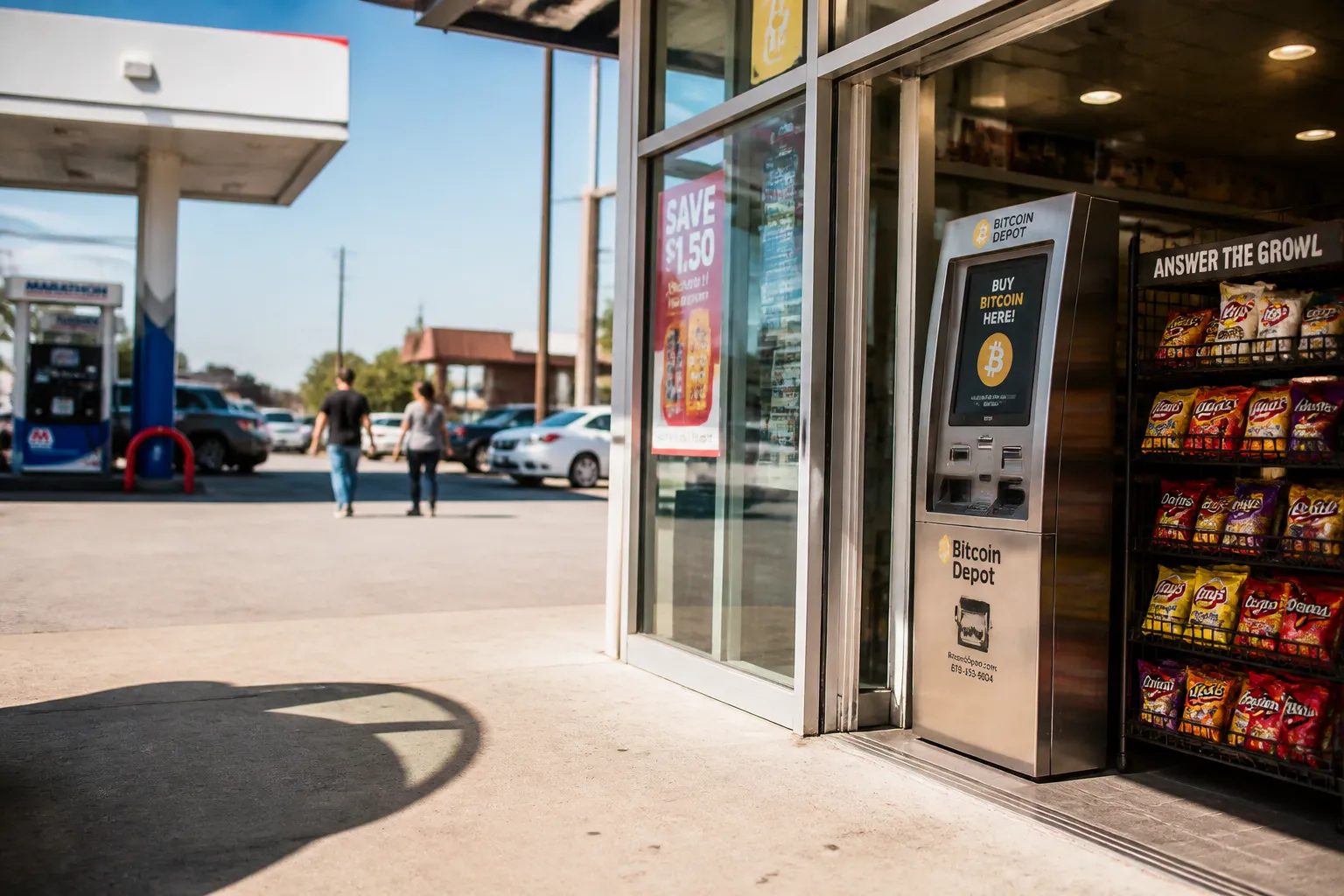
At the machine, you insert cash and buy cryptocurrency. Then the scammer sends a QR code or wallet address. Scanning it sends the crypto to an address the criminal controls. Crypto payments can be extremely hard to reverse. That is the appeal for the scammer.
What to do first if you have not sent anything yet
Stop. Do not withdraw cash, insert money, scan a code or install remote-access software because an unexpected caller said to. The FTC and bank warnings we reviewed agree on one point. No government agency, law enforcement agency, utility or prize promoter will ask you to pay in cryptocurrency. If someone does, it is a scam.
End the contact. Then reach your bank, company or agency using a phone number or website you found yourself. Do not use one the caller or message supplied. One credit union warns that it will never ask for login details, one-time codes or debit card information by call, text or email.
- Someone contacted you first.
- Your money is supposedly in danger.
- You are told to keep it secret or ignore bank staff and the kiosk operator.
- You are told to bring cash to a specific machine.
- You are sent a QR code or wallet address.
Any one of these is reason enough to hang up. Pressure to stay on the line is a warning sign in itself.
What to do if you already sent money
Move quickly, and keep expectations modest. Call your bank or card issuer, explain that you were directed to send cash to a crypto kiosk as part of a scam, and ask what options they have. Public guidance does not say whether victims can get money back or how often that happens. It says only that crypto transfers are very difficult to reverse. So ask, but do not count on a result.
Save everything. That means kiosk receipts, the phone number or username of the contact, screenshots of messages, and the QR code or wallet address you were sent. Details like these may help investigators and your bank.
Then report it. The FTC explains the scam on its consumer advice page on Bitcoin ATM scams, and reports go to ReportFraud.ftc.gov. You may also want to file a local police report, since it documents the loss and a bank may ask about one. No source we reviewed lays out a full recovery process, so ask your bank and the agencies for their current steps.
Why losses are so large and who is targeted
The numbers are big. According to figures attributed to the FBI, there were 13,460 complaints involving crypto kiosks in 2025, with about $389 million in adjusted reported losses. One summary of the same data puts the rise over 2024 at 23% for complaints and 58% for losses. More than half of complaints involved people over 50. Victims over 60 accounted for $257.4 million. These figures come from secondary summaries, not the FBI report itself, so check the original FBI Internet Crime Complaint Center material for exact totals.
One caution applies: a single complaint can include other transaction types, so the total is not all kiosk losses. Even so, the pattern is plain. Tens of thousands of crypto ATMs sit in stores, transit hubs and gas stations. Older adults appear over-represented among victims, and one source suggests this is partly because fewer of them know what these machines are. A scammer does not have to explain the machine if the victim has never heard of it. They just give directions.
Protecting yourself and the people you care about
Learn the pattern. Unexpected contact. A claim that your money is at risk. A request to pull cash from savings. A named kiosk. A QR code. Any unexpected demand to pay in advance, especially in crypto, is a scam.
Talk about it before it happens. A five-minute chat with an older relative can give them a reason to pause and call someone they trust when a caller turns up the pressure.
If someone you love has already sent money, skip the blame. Scammers count on embarrassment to keep people quiet. Help them cut off contact, gather records and file reports. If personal data was shared, the credit bureaus publish their own instructions for fraud alerts and security freezes. Our sources do not cover that step, so follow the bureaus' official guidance.