











Say you mailed your card payment on the 3rd. Your next statement arrives and the balance looks the same as before. No payment shows up. Maybe it went to the wrong address, maybe it got lost, maybe it was posted somewhere else. The public guidance does not tell us which, and that gap shapes everything below.
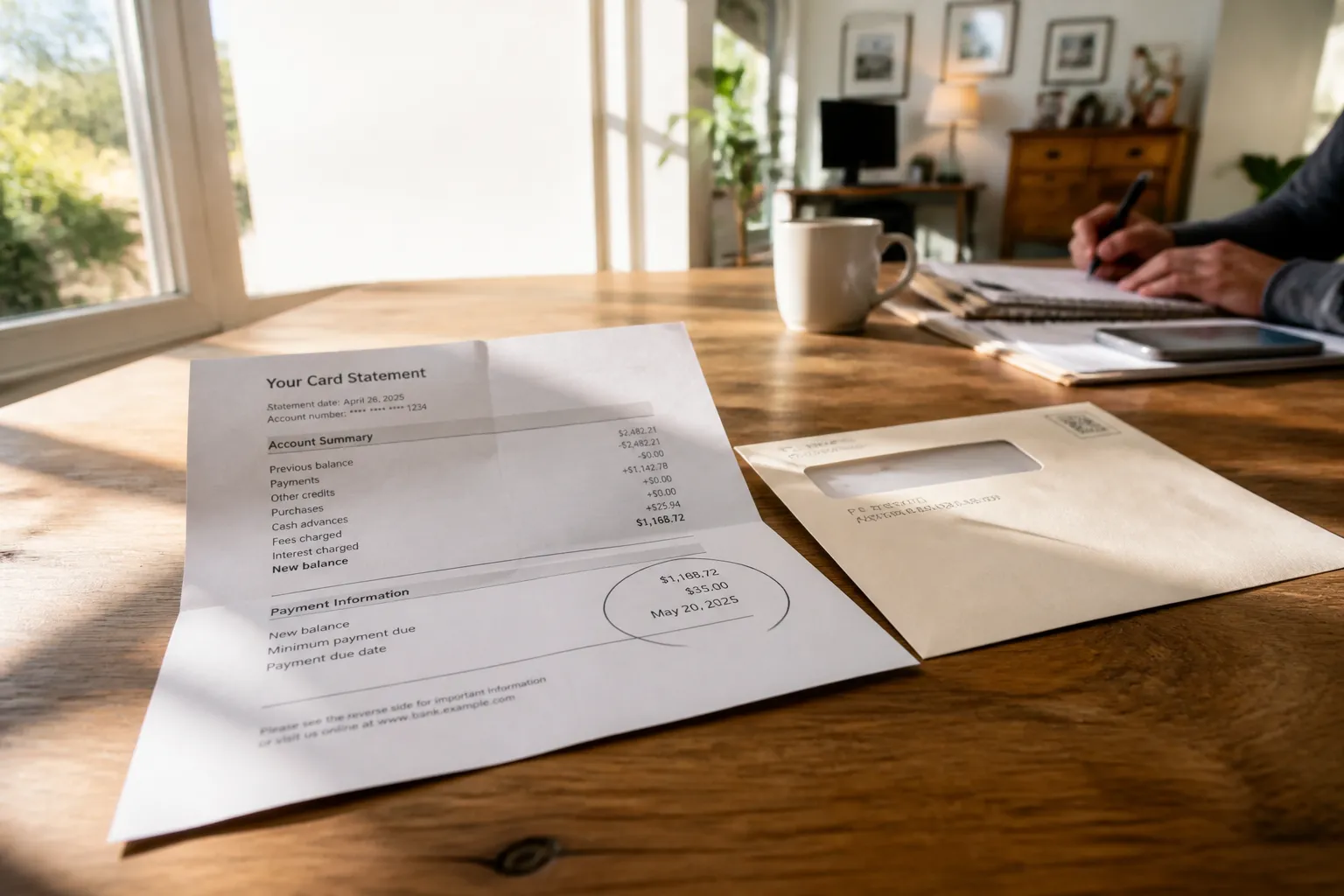
Why a missing payment needs two kinds of contact
Calling the card company is a sensible first move. It is also not enough on its own. The Consumer Financial Protection Bureau says that to protect your rights, you should also send a written billing error notice to the card issuer.
Here is the trap. That letter usually goes to the billing-error address on your statement, and that is generally not the address where you send payments. So you can mail a payment to the wrong place, and then mail your dispute to the wrong place too. Read the statement before you seal anything.
Your letter should include your name, address, and account number, plus a plain explanation of what you think is wrong and why. Keep a copy. Keep proof of mailing too. The CFPB's guide to fixing bill mistakes treats that record as your evidence that you raised the issue in writing.
The deadline and what starts the clock
The written notice generally has to go out within 60 days of the statement that should have reflected your payment. The clock is tied to the statement, not to the day you finally noticed. If the payment was missing from the March statement, the count starts with that statement's date.
That is a hidden cost of skimming bills. Someone who glances at the total due and pays without comparing the starting balance to last month's closing balance can burn weeks of the window without knowing it. A two-minute monthly check is cheap next to a narrowed deadline.
One thing the sources do not give us is how long the issuer has to investigate. Do not assume a timeline. Ask the company to tell you in writing how it is handling your case.
What protects you while a dispute is open
While a billing dispute is pending, you generally do not have to pay the disputed amount, or interest and other charges tied to it. You also should not lose a grace period on purchases because of that unpaid disputed sum.
That does not mean you can stop paying the account. You should still pay the undisputed portion under your account agreement. Otherwise the account can slip behind for reasons that have nothing to do with the dispute.
When the issuer finishes, there are two outcomes. If it decides you are right, the payment must be credited to your bill. If it decides you are wrong, it must explain its reasons, tell you what you owe, and say when payment is due. Treat that explanation as a prompt to check the math, not as a final verdict.
A twist: if a misdirected payment eventually lands after you have paid again, you may end up with a negative balance. CNBC reports that this can sometimes lead an issuer to freeze the account. Ask how the company will handle a credit before it happens, not after.
How to work through it, step by step
- Compare each statement's starting balance with the prior month's bill. Look for charges you do not recognize, including optional add-on products.
- Call the number on your bill or the back of your card. Explain the problem. The company may say to file online, which can require setting up online access.
- Send a letter to the billing-error address shown on the statement. The phone call alone does not do this job.
- Write down the representative's name and the date of every call.
Questions worth asking: Where and how should the notice be sent? Have you decided whether I am right or wrong? How much do I owe, and by when?
Now the honest limits. The sources do not say what happens to a card payment mailed to the wrong address. It could be returned, lost, or counted as late, and we cannot tell you which. They also do not explain late fees or credit report effects while a payment is misdirected or disputed. They do not cover a payment sent to the wrong card account number or the wrong issuer. Put those questions to the issuer in writing.
Money transfers are a different situation
Card billing dispute rules do not automatically cover person-to-person or other money transfers. If the recipient could not get the money because the details did not match what you entered, contact the provider right away. The CFPB says that if funds have not been released, corrections are often possible.
Providers may ask the recipient to confirm a name, address, or account number first. A responsible provider should not release money when those details do not match. Even a misspelled name can stop a transfer, which is annoying but also a safety net.
Remittance transfers carry a right to give the provider an oral or written notice of error, and the provider must investigate. The sources do not state the time limits, so move fast and keep records.
The harder case is money that went to the wrong account or through a wrong routing number. It may not be recoverable. The sources do not cover getting money back from a wrong third party. The only dependable protection is checking every digit before the money leaves.
Please seek a professional. This article is general information, not financial, tax or insurance advice. Please seek a licensed financial, tax or insurance professional about your own situation.


