











Two people can carry the same new spending on the same card and still see very different minimum payments. The difference is often a past-due amount sitting underneath the new charges. Here is how that works, and why a statement can surprise you after a missed payment.
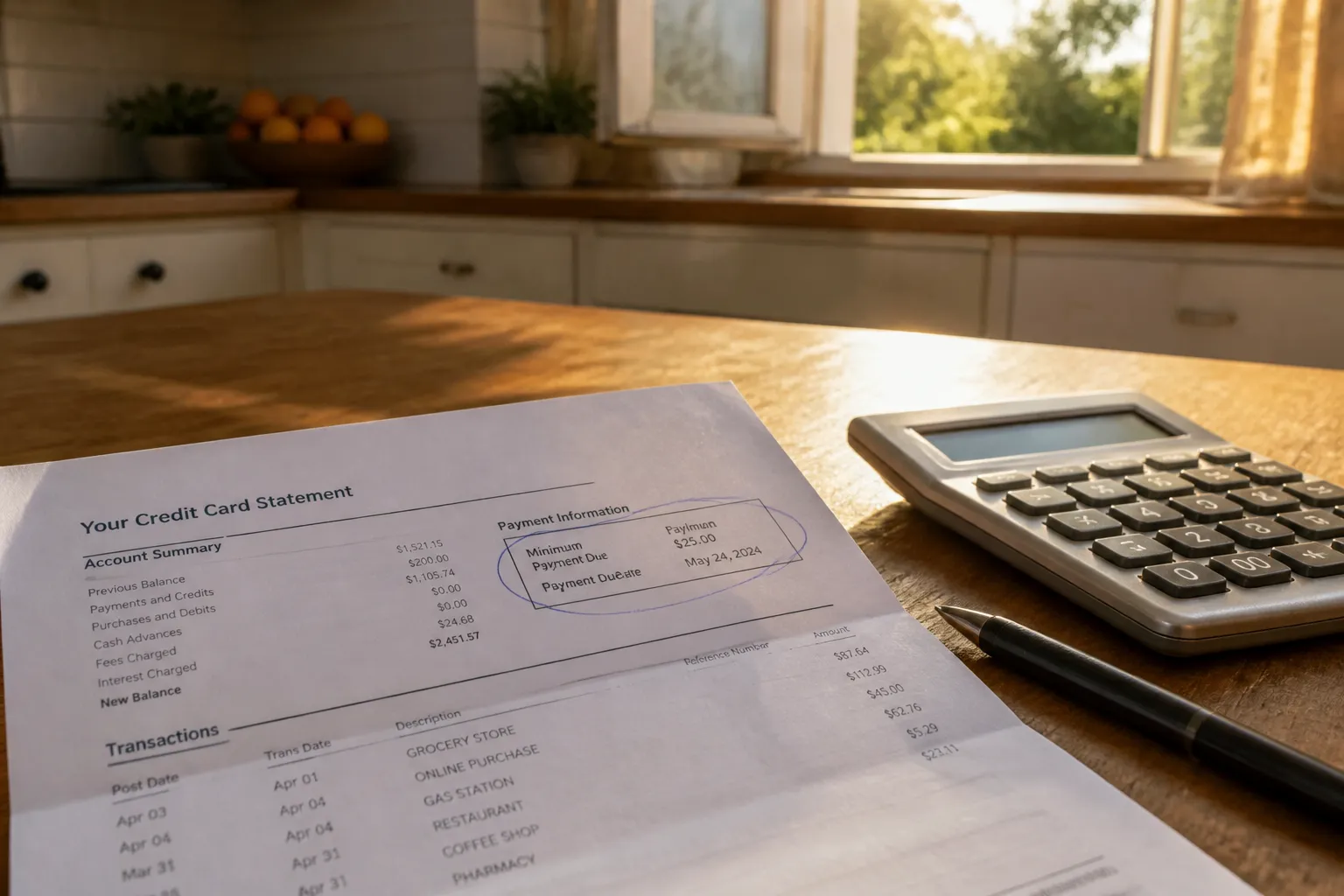
What a minimum payment normally covers
A minimum payment is the smallest amount you can pay by the due date to keep the account in good standing and avoid late fees or penalty APRs. Paying it keeps the account current. It does not clear the balance.
The figure is usually based on your monthly statement balance. Both the amount and the due date appear on the statement and in your online account. Those two numbers are the first thing to read each cycle. Circle them if it helps.
Interest still accrues if you carry a balance and pay only the minimum. That is why the minimum is not the true cost of the debt. Statements also include a minimum payment warning that shows roughly how long payoff could take if you only ever paid the minimum. Reading it once can be eye-opening, since the timeline is often longer than people guess.
How a past-due amount changes the figure
Picture a card with a $25 usual minimum. You miss a payment. Next month you make a new purchase or two, and the statement arrives. The minimum may not be $25 anymore. If there is a past-due amount or an overlimit amount, it may be added on top of the usual figure. Late fees can be added too.
So the number can jump even when your new spending barely changed. The increase can be bigger than people expect, because you are now being asked for the normal minimum plus what was already owed. The old amount does not vanish just because a new cycle began.
There is a gap here. The sources I reviewed do not spell out how the minimum changes once a past-due amount is cleared, or how a late payment affects the next statement. Do not assume the figure will snap back to its old level. Read the new statement line by line instead.
Why the calculation method varies
Issuers may use different methods to set the minimum. Some use a flat percentage or a fixed amount. Others use a percentage plus billed interest and fees. Some combine approaches depending on what happened on the account that cycle.
One issuer source gives a simple example. On a $700 balance, the minimum is the greater of 2% ($14) or a fixed $25. The greater figure is $25, so that is the base minimum. Any past-due or overlimit amount may then be added. That is an illustration of the mechanics. It is not a standard that applies to every account.
If your balance is smaller than the fixed amount, the minimum may be the whole balance. The sources do not name one formula or percentage that most issuers use. Your cardmember agreement explains the method for your specific account, so that document is the one to check.
How to check your own minimum and get help
Start with the statement and the cardmember agreement. Look for whether past-due, late fee or overlimit amounts are folded into the minimum. If the terms are unclear, ask your card company directly. A few questions can keep the call short:
- Does the minimum include past-due, late fee or overlimit amounts?
- How is the base minimum calculated on my account?
- What does the minimum payment warning say about payoff time?
If you cannot pay, the Consumer Financial Protection Bureau advises contacting your card company right away. Its guidance suggests being ready to explain why you cannot pay the minimum, how much you can afford, when regular payments could resume, and what new amount and duration you are asking for.
Paying only the minimum can keep your balance high relative to your limit. That ratio, called credit utilization, is one factor that may affect credit scores. No result can be promised, but it is a number you can watch over time.
Be careful with debt settlement companies. The CFPB warns about firms that charge up-front fees, guarantee they can make debt go away, or tell you to stop talking to your card company or stop making minimum payments. If you consider credit counseling, ask beforehand whether you will be charged, how much, and what services you get.
This article is educational only and is not personal financial advice. The sources also do not cover how past-due amounts are reported to credit bureaus, or your rights to dispute a minimum payment figure. Those are questions for your card company or a qualified professional.
Please seek a professional. This article is general information, not financial, tax or insurance advice. Please seek a licensed financial, tax or insurance professional about your own situation.


