Two Numbers on One Screen
You deposit a check at an ATM or snap a photo of it. Minutes later your app shows a bigger balance. It feels done. Often it is not. The app may show a ledger balance, which includes the deposit. It may also show an available balance, which is what you can actually spend. Regulation CC is the federal rule that deals with the gap between them. It implements the Expedited Funds Availability Act, and the Federal Reserve Board and the CFPB amend it.
The steps below are a general picture of how a deposit moves. Exact timing depends on your bank's own policy, which the sources reviewed for this piece do not spell out.
- The bank accepts the check and shows it in your ledger balance.
- The bank decides how much of it is available now, based on its funds availability policy.
- The check travels to the bank it was written on while any hold stays in place.
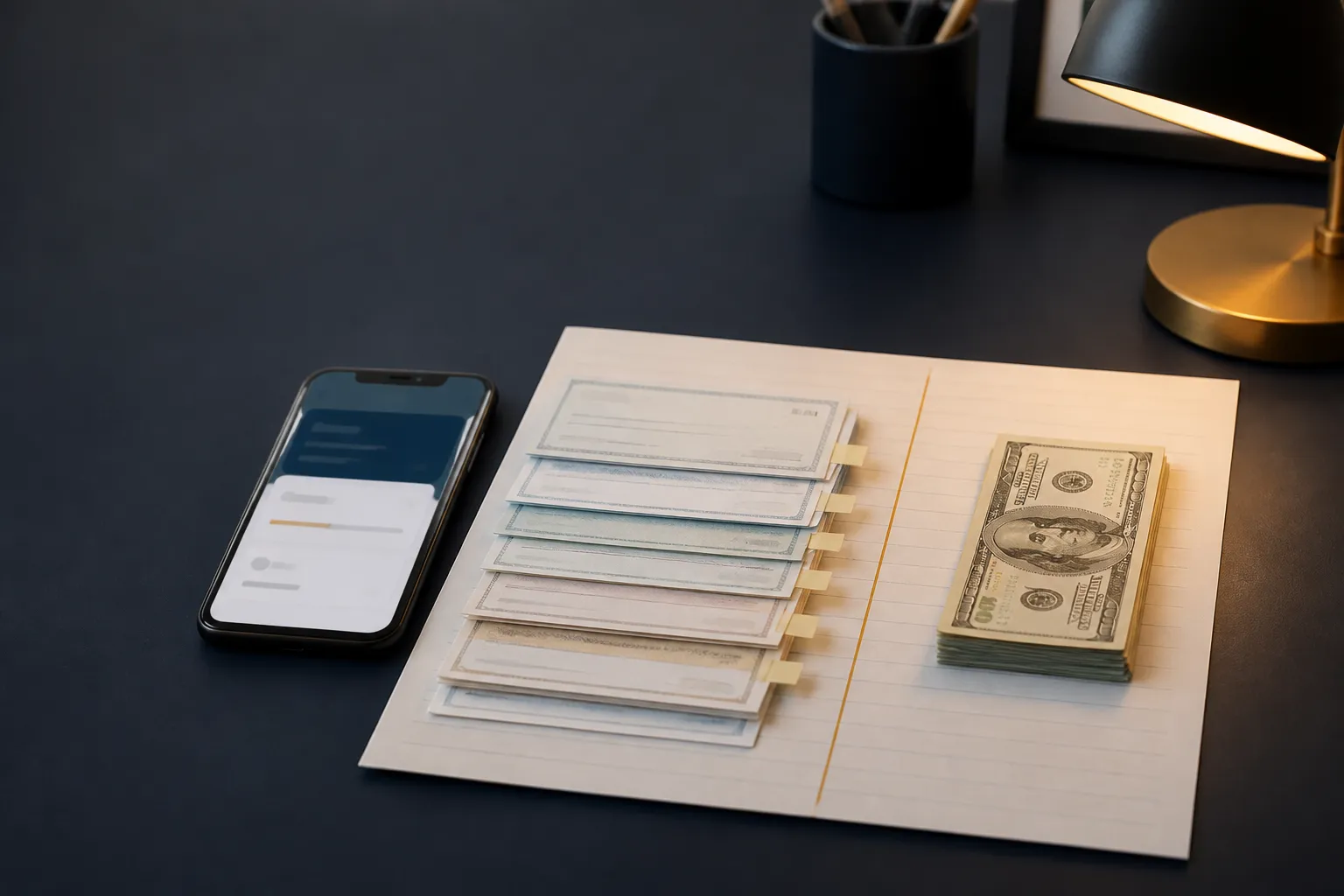
- The bank releases the held amount on the date its policy sets.
- That money moves into your available balance.
- If the check is returned unpaid, the bank may take the credit back.
What Regulation CC Covers
Regulation CC governs how banks handle check deposits and when they must make the money available. The Federal Reserve publishes a Regulation CC compliance guide. The FDIC covers the same law in its consumer compliance manual. The pages we could read mostly returned navigation text, so this article does not repeat their rules on hold lengths or availability schedules.
What the sources do confirm is the set of dollar thresholds inside the rule. Those figures decide where certain limits kick in. Congress requires them to be adjusted for inflation every five years, under 12 U.S.C. 4006(a). The Fed and the CFPB set the method in a 2019 rule, then announced the latest numbers in May 2024.
The 2025 Dollar Thresholds
The latest adjustment rests on a 21.8 percent rise in the CPI-W from July 2018 to July 2023. The previous round used a 10.5 percent rise and took effect July 1, 2020. The CFPB lists the new amounts on its Regulation CC threshold adjustments page. Here they are, old figure first.
- Minimum Amount from deposit (12 CFR 229.10(c)(1)(vii)): $225 to $275.
- Cash Withdrawal Amount (12 CFR 229.12(d)): $450 to $550.
- New-Account Amount (12 CFR 229.13(a)(1)(ii)): $5,525 to $6,725.
- Large-Deposit Threshold (12 CFR 229.13(b)): $5,525 to $6,725.
- Repeatedly Overdrawn Threshold (12 CFR 229.13(d)(2)): $5,525 to $6,725.
- Civil liability for an individual action (12 CFR 229.21(a)(2)(i)): $100 to $1,100 becomes $125 to $1,350.
- Civil liability cap for a class action (12 CFR 229.21(a)(2)(ii)(B)): $552,500 becomes $672,950.
The sources give these amounts but do not explain how each one applies to a specific hold. Do not assume a $1,000 deposit is treated a certain way until you read your bank's policy.
One date needs care. The CFPB and the text of the Consumer Compliance Outlook article say the new amounts take effect July 1, 2025. A table in that same article labels its column 7/21/25. That looks like a typo, but confirm the effective date with the CFPB rule before relying on it.
A Worked Example With Made-Up Numbers
Say your account holds $200. You deposit a $1,000 check. Your app now shows a ledger balance of $1,200. Your bank's policy, though, makes only part of the check available today. For this illustration, assume your available balance reads $400. Then you pay a $300 bill from the app. The payment goes through. A day later you try a $250 card purchase. Your available balance is $100, so the purchase can be declined or overdraw the account.
Nothing in this example is a rule. The amounts are invented to show why the two balances matter. The real split depends on your bank's policy and the thresholds above.
Spend against the available balance, not the ledger balance. If a check you deposited bounces, the bank can reverse the credit, and the account can go negative.
What to Do When a Hold Surprises You
Start with your bank's funds availability disclosure. It is the document that says how your bank applies the rule. Ask which of the thresholds, if any, applied to your deposit and on what date the held money becomes available. Ask for the answer in writing.
Keep your deposit slip or app confirmation until the money is available. The sources reviewed do not cover how to file a complaint about a hold or what notice a bank must send, so check your disclosure for that. If you think a bank broke the rule, the civil liability figures above show that the law gives damages a ceiling and a floor. For any specific dispute, talk to the bank first, and consider asking the CFPB or a consumer attorney.
Rules shift. The dollar amounts just changed, and the effective date has a typo in one place. Verify numbers against the CFPB page before you rely on them.
Please seek a professional. This article is general information, not financial, tax or insurance advice. Please seek a licensed financial, tax or insurance professional about your own situation.