










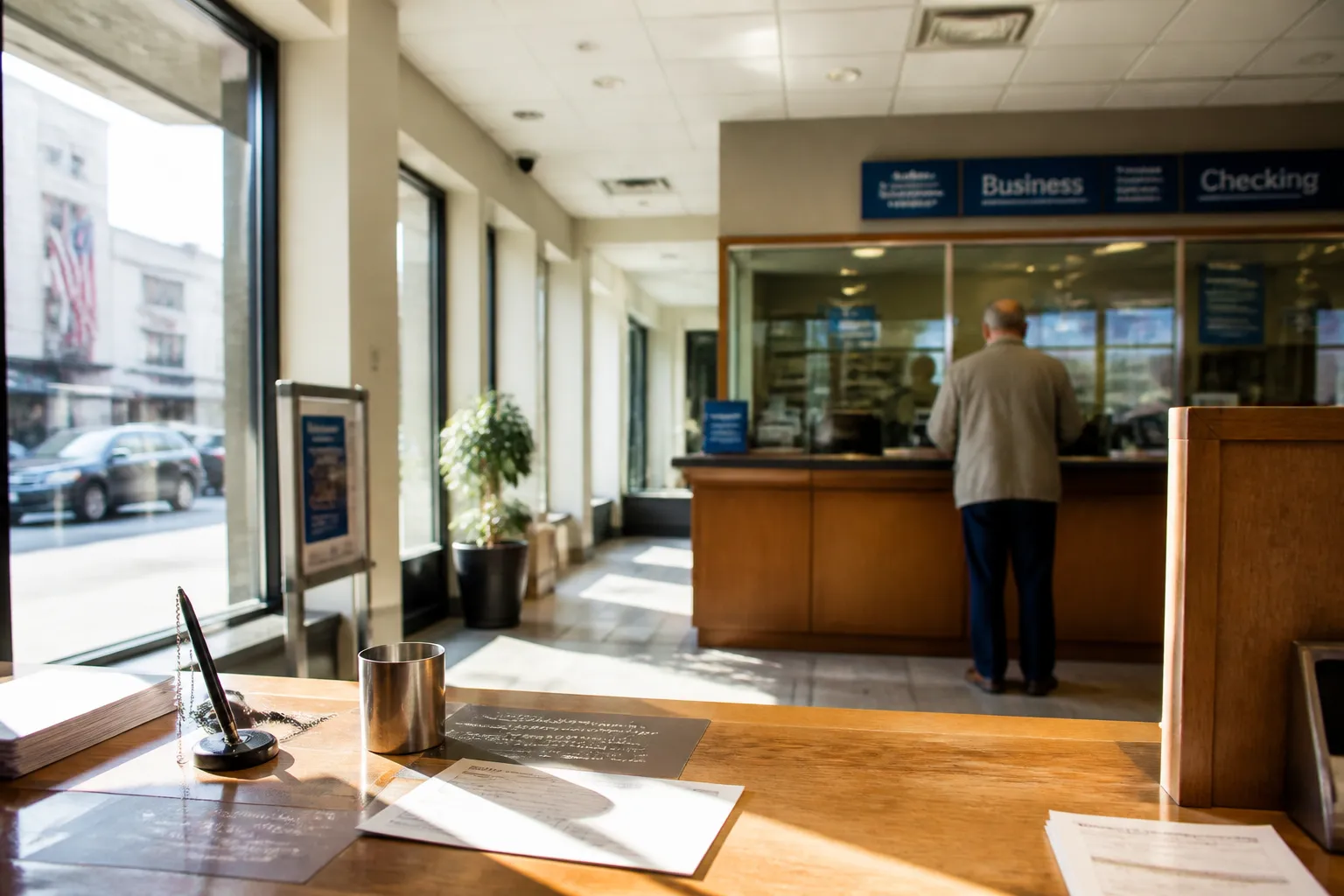
Walking into a bank branch to turn a paper check into currency sounds straightforward, but when you do not hold an active deposit account at that institution, the teller counter operates under different rules. Federal banking regulations do not force a financial institution to cash an item for a walk-in visitor. The transaction hinges entirely on whether the bank is the one that issued the instrument, whether the account it draws against holds sufficient funds, and whether you can prove you are the named recipient.
Federal guidelines clarify that banks and credit unions may set their own verification rules and fee schedules when handling items presented by non-customers.

Why the issuing bank may say no
Many consumers assume that a valid check must be honored by any bank teller window in town. In practice, no federal law requires banks to cash checks for non-customers. Most retail institutions limit their cashing services to existing customers who maintain open accounts. When you do not have an account, the branch takes on all the exposure of handing over cash without having a deposit balance to freeze if the item later encounters an issue.
Refusals are especially common when you bring a check to a bank where neither you nor the writer maintains an account. In that scenario, the institution has no relationship with either person. The teller cannot look at internal records to see if the payer's account has enough money, nor can the branch place a hold on your funds. As outlined in Consumer Financial Protection Bureau guidance on check cashing, institutions are not required to assist someone without an account, and policies differ sharply across branches and credit unions.
When a non-customer can usually get a check cashed
Your highest probability of turning a check into cash without a personal account is visiting the issuing bank, which is also called the paying bank. This is the specific institution where the payer keeps their checking balance. Because the money is held on that bank's own ledgers, the teller can query the payer's balance directly within their computer system in real time.
A paying institution will generally process an on-us check for a non-customer if several operational standards are met. The item must be drawn on an active account with adequate funds, the date on the front must not be stale, meaning usually no more than six months old, and you must appear in person as the named payee with valid credentials. Under CFPB guidance on non-customer identification, an institution holding the payer's account can require formal identification before handing over funds, and it may refuse the transaction if you cannot produce satisfactory proof.
Identification and how the bank verifies a check
Before a teller counts out bills, the branch runs a mechanical check of the item and your credentials. The sequence begins on the back end: the bank looks up the checking account number printed along the bottom of the paper slip to verify that the balance covers the total sum. Once the funds are confirmed, the employee turns to identity authentication.
You will need to present primary, unexpired government credentials. Acceptable documents typically include:
- A state-issued driver's license or official identification card.
- A United States or foreign passport.
- A military identification credential.
- A permanent resident card.
Some institutions require a secondary document to confirm your physical address, such as a recent utility statement. If you are not certain which institution holds the underlying funds, look at the front of the document. The bank name and logo are usually printed in the upper left or upper right corner. Checking that detail before leaving home saves a wasted trip to an unaffiliated institution.
Fees and why they vary
Even when an issuing institution agrees to process your check, the service is rarely free. Under federal rules, banks can legally charge non-customers a check-cashing fee to cover administrative handling and risk. The pricing model varies widely across the banking sector.
Some institutions assess a flat fee, such as $8 per item. Others use a tiered schedule that waives charges for smaller checks up to $25 and charges above that threshold. A third common structure calculates the fee as a percentage of the total face value, such as 2.50 percent, combined with a mandatory minimum charge like $3. These deductions come straight out of the cash you receive at the window.
There is an important nuance regarding payroll earnings. Some states enforce wage payment statutes requiring employers to provide at least one method for workers to receive their full pay without deductions or surcharges. In those jurisdictions, an employee may have the right to cash a payroll check at the employer's bank without an out-of-pocket processing fee. Because these rules stem from state labor laws rather than uniform federal rules, consumers should check with their state labor department or attorney general to verify regional protections.
Alternatives and questions to ask before you go
Visiting the issuing bank is only one pathway when you need to liquidate a check. If you have a personal account at a different financial institution, you can present the check there. While the teller may decline an immediate cash payout on an unverified third-party check, you can deposit it into your account. Under standard collection rules, deposited funds typically become available for withdrawal within one or two business days.
Retail check-cashing services provide another avenue. Supermarkets, big-box department stores, and convenience grocers often cash payroll checks, federal tax refunds, cashier checks, and insurance settlements. Retailer processing charges are often under $10, though eligibility limits vary. Certain reloadable prepaid debit cards also permit check deposits via mobile phone camera scans, loading money directly onto the card without requiring a traditional checking account.
Because policies, dollar ceilings, and fee tables change frequently, a brief phone call before traveling can prevent unexpected delays. When you speak to a representative, verify five core factors:
- Whether the branch cashes checks drawn on its accounts for walk-in non-customers.
- What forms of primary and secondary photo identification are required.
- The exact fee schedule or percentage deduction that will apply.
- Any restrictions on maximum dollar amounts or checks older than six months.
- Whether state payroll rules eliminate the cashing charge for an employer's check.
Please seek a professional. This article is general information, not financial, tax or insurance advice. Please seek a licensed financial, tax or insurance professional about your own situation.


