











The Closing Disclosure arrives near the end of a mortgage, when a signing date may already be on the calendar. That can make its five pages feel like a formality. Read it beside your most recent Loan Estimate instead. The useful question is not just, “What do I owe?” It is, “What changed, and why?”
Know what the form is telling you
A Closing Disclosure shows the final terms of a mortgage, projected monthly payments, and closing costs. The lender must provide it at least three business days before you sign the loan documents. That review period gives you time to compare numbers and raise questions before closing, according to the Consumer Financial Protection Bureau (CFPB).
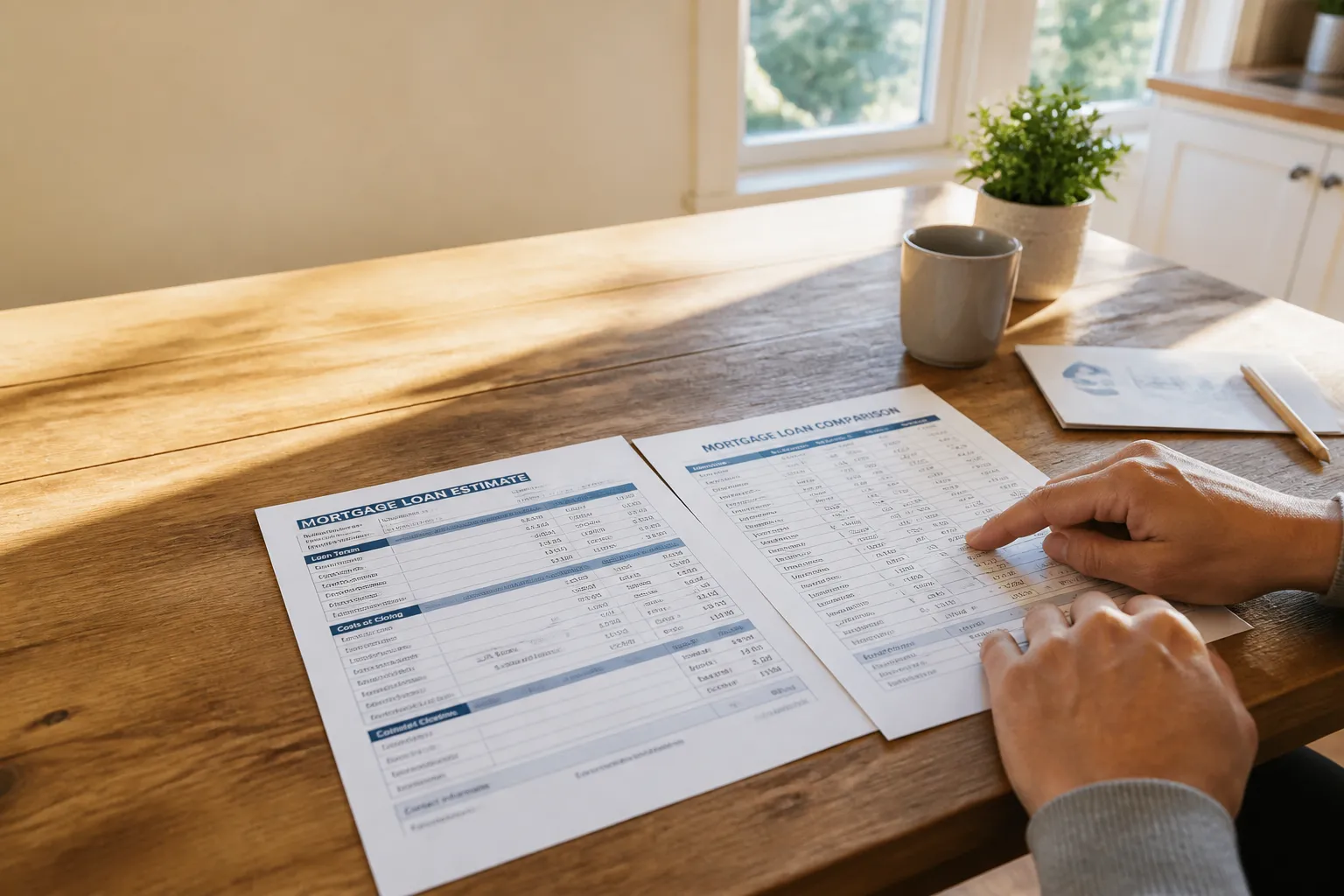
Keep your most recent Loan Estimate within reach. The two forms were designed to be read together: the Loan Estimate sets out the terms and costs earlier in the process, while the Closing Disclosure shows where they stand near the end. If you have received more than one Loan Estimate, check which is the latest before you compare figures.
Not every mortgage transaction uses this form. Reverse mortgages use a HUD-1 Settlement Statement and a final Truth in Lending Disclosure instead. Home equity lines of credit and certain manufactured housing loans also use different disclosures. If the paperwork in front of you is not called a Closing Disclosure, ask which earlier document you should use for comparison.
Read page 1 as a set of promises to verify
Start with the identifying details. Is your name spelled correctly? Do the loan term, purpose, product, type, amount, and interest rate match what you expected? Compare the loan amount and rate with the most recent Loan Estimate. A difference needs an explanation, even if the new number looks small.
Next, look for the boxes covering a prepayment penalty and a balloon payment. These terms can affect what happens if you pay the loan off early or reach a large payment later. Do not assume the answer is no because neither feature came up in conversation. Check what the form says, then ask about any answer you do not understand.
Read the Estimated Total Monthly Payment alongside Estimated Taxes, Insurance & Assessments. The monthly payment figure may not tell you every housing cost you will pay separately. Check whether the taxes, insurance, or assessments listed are included in escrow. If an item is not, ask when and how it will be paid. The CFPB’s Closing Disclosure explainer offers prompts for this page.
On page 2, compare lines before totals
Page 2 itemizes closing costs. Match each charge to the corresponding line on your Loan Estimate, then compare the totals. Mark any charge that is new, has increased, or has an unfamiliar name. A changed total tells you where to look; the individual lines help you ask a precise question.
Not every increase has the same rule. Some costs cannot increase from the applicable estimate, some are subject to a limit on increases, and others can change without that kind of cap. That means an increase is a reason to ask, not proof by itself that the disclosure is wrong. For each change, request an explanation that identifies the earlier estimate, the final charge, and why the amount changed. The rules for the form appear in Regulation Z, 12 CFR 1026.38; your lender can explain how a particular charge was treated.
If an answer refers to a change you agreed to earlier, find the document that records it. If the answer refers to a service or fee you do not recognize, ask what it pays for. Keeping the discussion tied to a named line is more useful than asking why closing costs went up in general.
On page 3, trace the cash you need at closing
Page 3 shows Cash to Close. This is the amount expected from you at closing, which may be sent by wire or provided in another accepted form, such as a cashier’s check. Compare it with the cash-to-close figure on your most recent Loan Estimate. If it changed, ask which entries account for the difference. Check the amount again against the instructions you receive for closing day.
Payment instructions deserve a separate check. The CFPB warns about closing scams, including attempts to divert money during this stage. If you are told to wire funds, confirm the instructions using a trusted phone number you already have, rather than a number supplied in the message containing the instructions. A last-minute change in destination is a reason to stop and verify before sending money.
Do not skip pages 4 and 5 because the largest dollar amounts appear earlier. Read them and flag any term or statement you cannot explain. The CFPB’s Know Before You Owe resources include a sample form that can help you locate terms and compare disclosures.
Use the review window for answers, not guesses
Confirm when the Closing Disclosure was received and when signing is scheduled. The three-business-day requirement is tied to receiving the form before signing, so ask the lender to confirm the dates if the timing is unclear. Do not guess how a weekend or holiday affects your closing schedule.
Put questions in writing while there is still time to address them: Which term changed from my Loan Estimate? What explains this fee increase? Is any listed tax or insurance charge outside escrow? What happens next if a figure is an error? Keep the lender’s responses with your copies of both forms. If a correction is needed, ask what the process is and whether it affects the signing date.
Signing makes you responsible for the mortgage loan. The review period is your chance to get a clear account of the terms and costs before that happens. This article is educational and is not personal financial, legal, or tax advice.
Please seek a professional. This article is general information, not financial, tax or insurance advice. Please seek a licensed financial, tax or insurance professional about your own situation.


