











A household can have a quiet money week on Monday and a crowded one by Friday. Rent clears, groceries go on a card, and a school fee comes out of checking. Tracking those movements without budgeting software sounds simple, but the first question is where to begin. The Consumer Financial Protection Bureau offers worksheets and conversation tools. Its materials are not a complete, self-guided routine for recording every purchase.
“A worksheet can give a household structure. It cannot decide which dates matter.”
What the CFPB toolkit offers
The CFPB’s Your Money, Your Goals toolkit is built for conversations between practitioners and the people they serve. It covers tracking income and bills, and making spending decisions that support personal goals. The page sits in the bureau’s resources for practitioners. The tools are framed for a staff member or volunteer to use with someone else, not as a standalone course for a person tracking expenses alone.
The toolkit includes 43 tools and handouts, with directions and recommendations about which ones may fit a person’s situation and available time. They come as individual fillable PDFs, grouped by topic. Categories include Saving and Tracking Income and Benefits. The page lists June 2020 as its update date. Prices and statement formats may have changed since then, and the page does not say whether the materials reflect that.
A worksheet built to support a conversation can offer useful structure. It does not automatically show a reader how to log Tuesday’s gas purchase or review a month of transactions. Treat the toolkit as a resource to inspect.
What the spending tracker files can tell you
The CFPB also hosts a file named as a spending tracker, dated November 2018, in an ADA version, and a separate file named as a well-being spending tracker. The names suggest forms for recording spending. The PDF text available for this article could not be read, so their fields, instructions, and layout are unconfirmed.
Readers can open the CFPB’s spending tracker PDF and the well-being spending tracker PDF and read them firsthand. Check that each file opens, and read its wording before relying on it. A hosted document can carry an older date, and the sources do not say how often these files are reviewed.
Picture a household opening a tracker on the first Sunday of the month. Before writing anything down, its members would look at what the form asks for. Then they would decide whether those fields suit the question they want answered. That example is illustrative, not a claim about what either PDF contains.
How the guided approach works
According to the CFPB, staff and volunteers use the toolkit in guided conversations. The goal is to help someone look at spending, income, and bills, and then set goals. Individual tools can be downloaded and filled out. The bureau also offers training resources for the people who lead those conversations. The design fits a setting where a facilitator can explain a worksheet or help someone pick one.
For someone working alone at a kitchen table, the toolkit supplies categories and structure. The cited materials do not lay out a full self-tracking routine, including how often to record purchases or which categories to use. A reader should not assume the toolkit settles those points just because it includes a tracker.
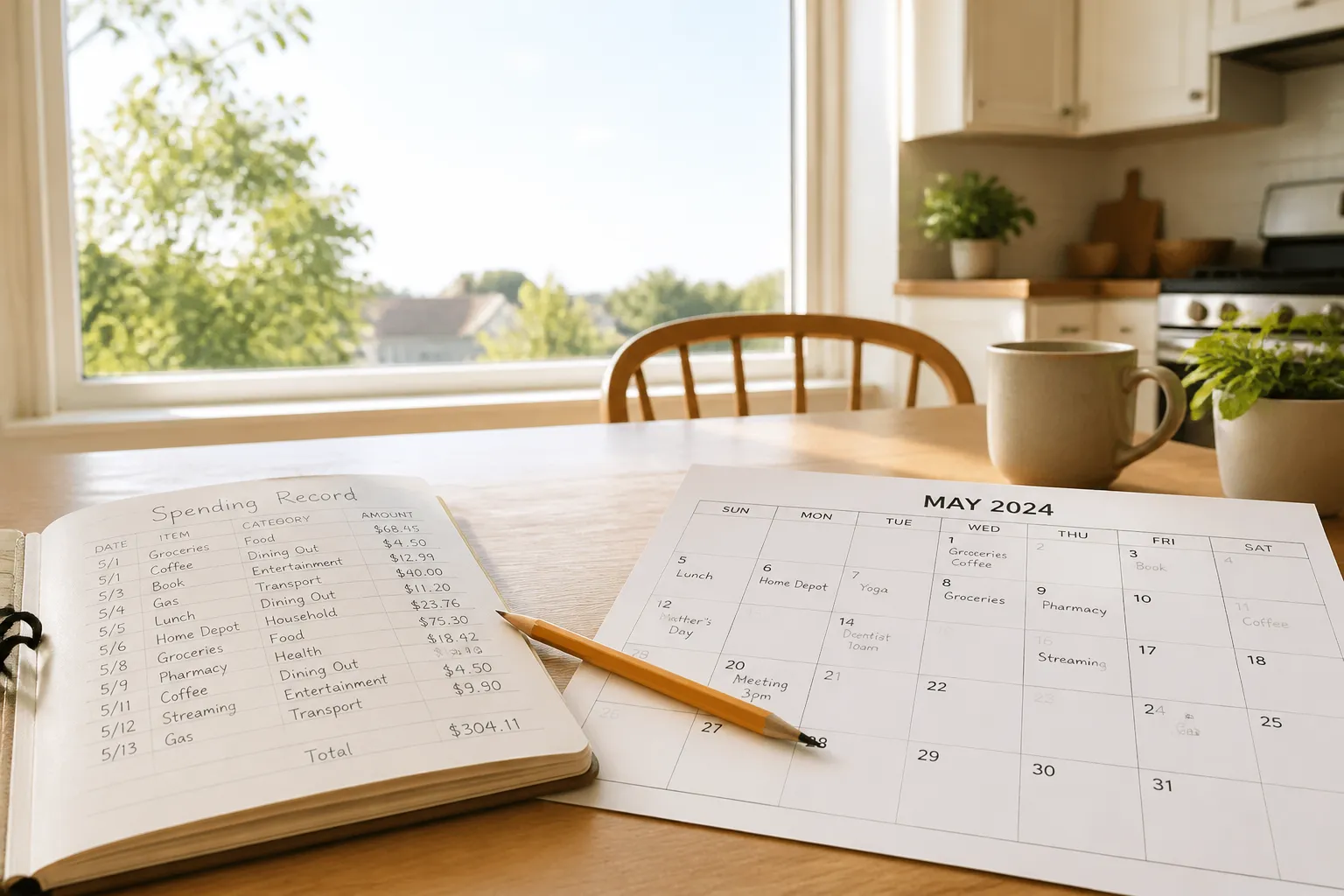
A wall calendar can make the open questions visible. These are reflection prompts, not CFPB rules:
- When does income usually arrive?
- Which bills fall before that date?
- Do some purchases cluster on weekends?
- Do any costs show up only a few times a year?
Answers to those questions can show what a household wants its tracking method to reveal.
General starting points to try
The ideas below are common recordkeeping habits, not guidance from the CFPB sources. Adjust them to your own situation.
Start with dates. Mark pay dates and bill due dates on a calendar, then see which bills land before the next paycheck. That one view often explains why a month feels tight. Next, choose a small set of fields for each entry: the date, the amount, what it was for, and how it was paid. Fewer fields are easier to keep up.
Pick a rhythm you can repeat. Some people write entries daily. Others set aside ten minutes once a week and work from receipts. Either can work if the record gets reviewed. At month’s end, compare your notes with your bank or card statements. Gaps often point to cash spending or small charges that were never written down.
Keep the first month plain. Use broad categories such as housing, food, transport, and everything else, and split them only when a pattern needs a closer look. A paper notebook, a spreadsheet, and statement printouts are all possible places to keep a record. The CFPB materials covered here do not rank them. The better choice is the one a household will actually open.
Questions the sources leave open
The available CFPB sources do not address irregular income, cash purchases, or shared household accounts. A family with weekly pay and cash tips faces a different recordkeeping puzzle from a household with one monthly deposit and mostly card purchases. That example is illustrative. Those households may need to adapt any form they use.
Privacy is another gap. The cited materials say nothing about storing spending records securely or which account details to leave out. That applies to paper and digital files alike. Before filling in a form, check what it asks for and think about who might see the finished record. Avoid writing full account numbers on a sheet you do not need them on.
The sources also give no cost figures for any tracking method. They do not say whether a notebook, spreadsheet, or statement review is right for every household. What they do show is how a practitioner-led conversation organizes income, bills, and goals. The toolkit’s date, its intended audience, and the unread tracker contents are all part of that picture. A simple question can carry a household a long way: which dates and transactions would make this month easier to understand?
Please seek a professional. This article is general information, not financial, tax or insurance advice. Please seek a licensed financial, tax or insurance professional about your own situation.


