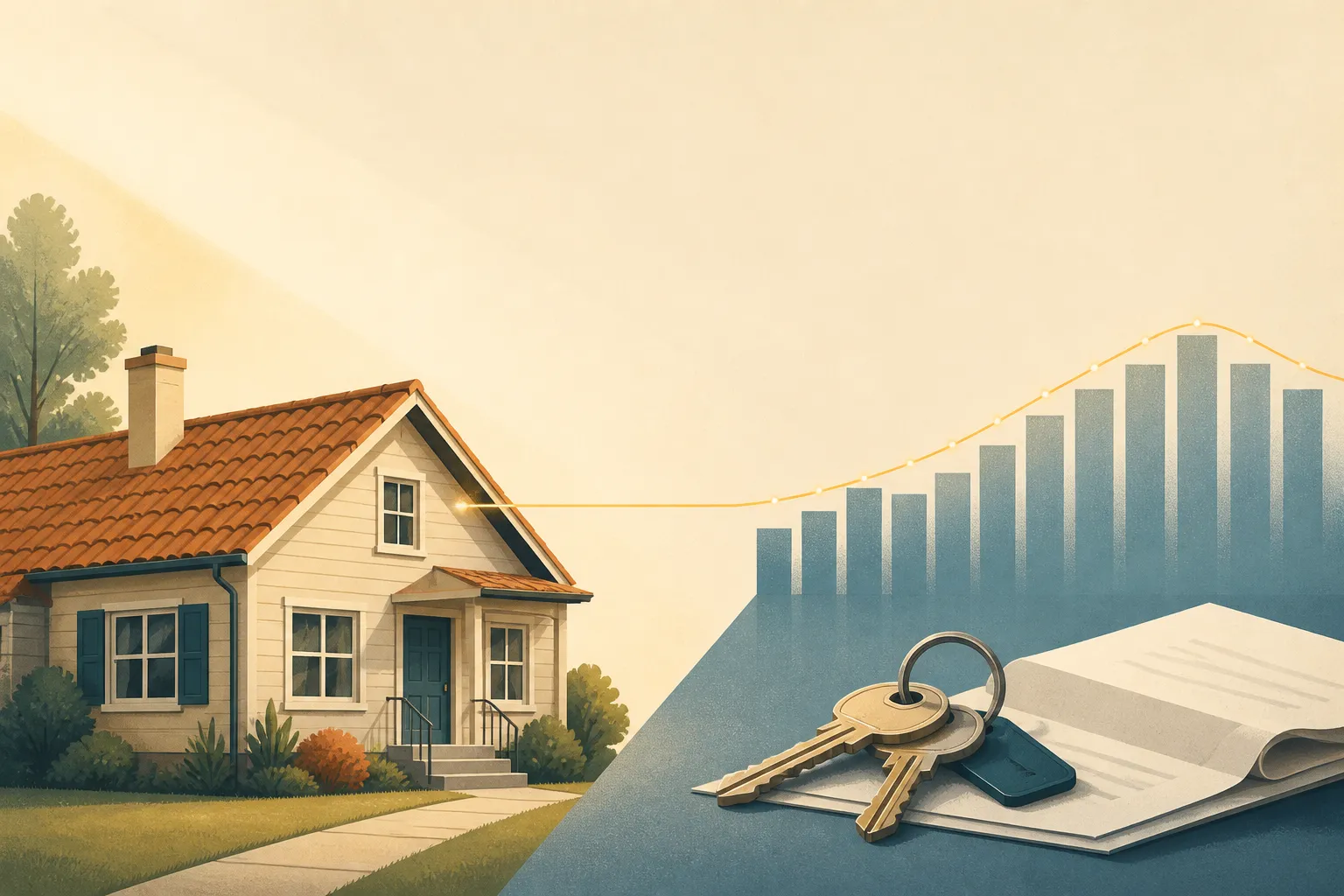

A change in central bank policy rarely stays confined to Washington meeting rooms. For homeowners who carry a balance on a variable credit line, the math reaches the kitchen table within a billing cycle or two. Understanding how those shifts move from a federal committee room to your monthly statement helps you keep your household ledger steady when borrowing costs fluctuate.
What a HELOC is and why its rate moves
A home equity line of credit, commonly called a HELOC, is an open-end line of credit secured by your residence. Your equity represents the appraised value of the home minus what you still owe on your primary mortgage. According to the Consumer Financial Protection Bureau's guide to home equity lines, you do not receive the cash as a single lump sum. Instead, you can draw funds, repay the balance, and draw again up to a preset credit limit during what is known as the draw period, which often lasts up to ten years.
Unlike a traditional fixed mortgage where the rate is locked for decades, a HELOC almost always carries a variable interest rate. That means the rate you pay changes over the life of the line. The underlying index for most variable home equity products is the Prime Rate. When commercial banks adjust the Prime Rate, they generally do so in step with adjustments to the federal funds target rate set by the central bank. If benchmark borrowing costs drop, HELOC rates usually decrease by a comparable margin. If benchmark costs climb, the rate on your balance moves upward along with them.
How the Fed's decisions reach your payment
The Federal Open Market Committee, or FOMC, meets periodically throughout the year to evaluate employment, gross domestic product, and inflation figures. Based on that data, the committee votes to raise, lower, or hold its target rate. The central bank does not set commercial retail interest rates directly. It establishes the cost of overnight lending between banks, which sets off a chain reaction across short-term lending markets.
This chain explains why different home loans respond differently to monetary policy. Home equity loans, which provide a single lump-sum payout at a fixed rate, tend to track longer-term bond markets and broad investor expectations rather than overnight bank rates. A HELOC, by contrast, sits on a direct transmission line from the Fed to the Prime Rate. Even so, the change does not always land overnight. Lenders review and reset rates according to a schedule written into your contract, such as the first day of the calendar month or the start of a billing cycle.

Because each lender establishes its own schedule and margin, two neighbors with identical balances can see rate adjustments take effect at slightly different times. The size of the change tracks the underlying index, but the baseline depends on the individual loan agreement signed at closing.
What a rate change does to your monthly payment
During the draw period, your required monthly payment is usually calculated as a percentage of your outstanding balance plus the accrued interest. When the rate changes, the interest charge changes immediately, even if your total balance has not moved by a single dollar.
Consider what this looks like across a typical household budget. If a family carries a $50,000 balance on an open line, every percentage point increase adds roughly $500 per year in interest costs alone, or about $41 per month. In an economy where grocery, utility, and insurance costs are already claiming a larger share of take-home pay, an extra $40 or $80 each month requires real trade-offs elsewhere in the budget. When rate cuts occur, that same arithmetic works in reverse, providing breathing room without requiring an extra principal payment.
Some agreements require borrowers to take a minimum draw each time they tap the line, such as $300, or require a certain balance to remain active. Others allow interest-only payments during the initial draw period. While interest-only terms keep monthly obligations low early on, they leave the entire principal balance untouched. When that draw window closes, the loan converts to full amortization, and the payment must suddenly cover both principal and interest over a shorter repayment window.
Credit limits can change even when rates do not
Borrowers often treat an approved credit line as an immutable emergency fund, but lender terms contain clauses that protect the institution against falling real estate values. Federal regulations permit lenders to freeze further draws or reduce an available credit line if the value of the underlying home drops significantly below its initial appraised amount.
This mechanism means that in a softening housing market, the credit you anticipated using for a planned renovation or unexpected repair can vanish without notice, even if your payment history is spotless. Depending entirely on a variable line as a safety net leaves a household exposed to decisions made by an underwriter hundreds of miles away. Keeping cash reserves in an accessible savings account ensures that household emergencies do not rely on an external credit decision.
The most serious distinction between a credit line and an unsecured personal loan is the collateral. A HELOC uses your home to secure the debt. If family income drops or cumulative rate hikes push the monthly obligation beyond reach, failing to make payments puts the property itself in jeopardy. For that reason, the CFPB home equity line booklet urges consumers to evaluate whether they can comfortably handle potential payment increases before tapping home equity.
Questions to ask before you borrow or when you review your plan
If you are shopping for a line or re-evaluating an active balance, reviewing loan disclosures provides clarity that headlines cannot offer. Key questions to examine include:
- What index does the lender use, what margin is added to that index, and how frequently can the rate change?
- Is there a lifetime interest rate cap, and is there a periodic cap on how much the rate can increase in a single year?
- What upfront fees, appraisal costs, or ongoing maintenance charges apply to the account?
- Is an initial draw required at closing, or is there a minimum dollar amount for subsequent draws?
- Under what specific conditions can the lender freeze the line or reduce the credit limit?
- What will the monthly payment become once the draw period ends and repayment begins?
Tracking Federal Reserve calendar dates can help you anticipate upcoming shifts, but the exact impact on your wallet is always governed by the terms printed on your loan note. Reading those terms carefully keeps your household prepared for whichever direction borrowing costs take next.