When you check the price of a gallon of milk or a carton of eggs, you are looking at the tail end of a long chain of numbers. At the top of that chain sits a single figure: 2 percent. That is the annual inflation rate the Federal Reserve aims for across a wide basket of goods and services. When the Fed adjusts interest rates, it is usually trying to steer the overall pace of price increases back toward that 2 percent mark, a benchmark that shapes both the price of your grocery basket and the cost of borrowing money.
- A fixed annual pace: The Federal Reserve targets a 2 percent annual inflation rate across a broad collection of goods and services to meet its congressional mandate for price stability and maximum employment.
- A five-year review cycle: The Federal Open Market Committee (FOMC) sets the target and reviews its framework about every five years. Fed Chair Jerome Powell unveiled the 2025 Statement on Longer-Run Goals at the Jackson Hole symposium in August 2025, keeping the 2 percent figure intact.
- A quiet baseline for spending: The goal is to reach the standard described by former Fed Chair Alan Greenspan, where inflation is so low and predictable that households and businesses do not have to factor future price jumps into their everyday spending decisions.
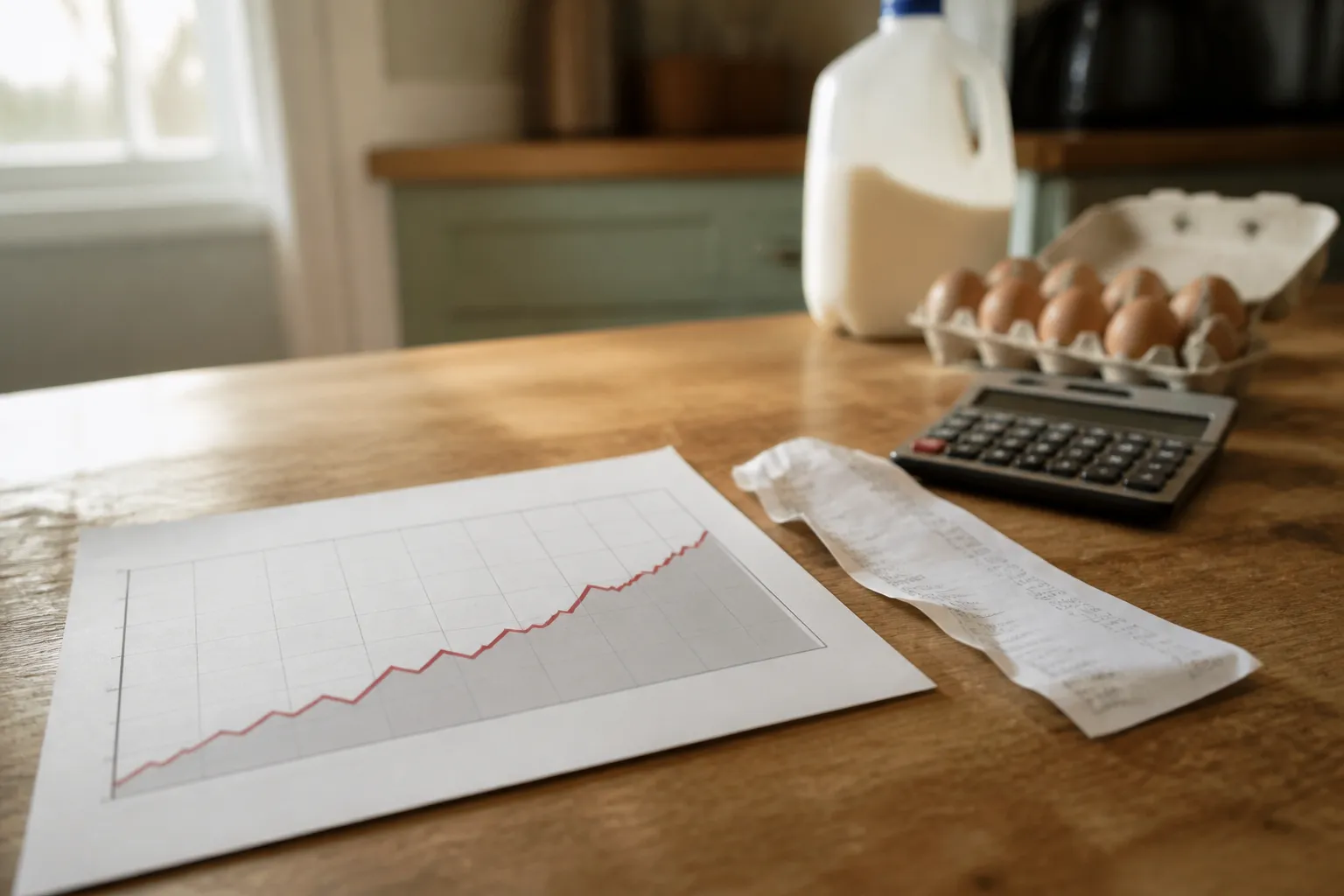
- The preferred yardstick: When the central bank measures its progress toward 2 percent, it watches the personal consumption expenditures (PCE) price index rather than other monthly headline metrics.
- The main policy lever: To nudge inflation up or down, the FOMC adjusts the federal funds rate, which is the overnight rate banks charge one another to lend reserve balances at the Federal Reserve.
- A multi-year stretch above the line: On the PCE measure, inflation has stayed above the 2 percent mark since 2021, and headline inflation stood at 2.7 percent in October 2025.
What the 2 percent target is
The Federal Reserve operates under a dual mandate from Congress: keep prices stable and support maximum employment. To put a hard number on price stability, the FOMC aims for a 2 percent annual inflation rate over the longer run. In August 2025, at the Jackson Hole symposium, Chair Jerome Powell presented the committee's updated strategy statement as part of its regular five-year review, and the FOMC later reaffirmed that statement in January 2026. The 2 percent figure remained the anchor.
In kitchen-table terms, a 2 percent target means prices still rise, just slowly enough that you do not feel forced to buy a freezer full of meat today because you fear what it will cost next month. The Atlanta Fed notes that policymakers still look to former Fed Chair Alan Greenspan's practical definition of price stability. That happens when families and business owners can plan their budgets without letting inflation drive their decisions.
How the Fed measures inflation
Not every inflation number in the news is the one the FOMC targets. When the Fed talks about 2 percent, it is reading the personal consumption expenditures (PCE) price index. A news broadcast might quote a different headline figure for the exact same month, which can make it sound like the target is closer or further away than the Fed thinks it is. For instance, the Atlanta Fed noted that headline inflation registered 2.7 percent in October 2025, a reading that sat above the 2 percent goal. Before comparing a monthly number to the Fed's target, it pays to check which price index the report is actually citing.
The public explanations from the Fed's basic guides do not break down the exact math behind the PCE index or how its formula differs from the consumer price index (CPI). Readers who want to dig into why the two indexes weigh items differently can explore the Cleveland Fed's inflation basics guide and the Federal Reserve's official data pages.
How the Fed uses the federal funds rate
The Fed cannot set the price of a loaf of bread or a gallon of gas directly. Instead, it works through the banking system by adjusting the federal funds rate. That is the overnight interest rate depository institutions charge each other to borrow balances held at the Federal Reserve. When inflation runs above 2 percent, the FOMC generally raises the federal funds rate to make borrowing more expensive and slow down spending across the economy. When inflation drops well below 2 percent, especially if the job market is weakening, the committee typically lowers the rate to encourage borrowing and spending.
Those overnight bank rates eventually ripple out to influence the interest rates consumers pay on many types of loans and credit lines. However, the Fed's overview materials do not spell out how quickly or how much a change in the federal funds rate passes through to specific products like credit cards, auto loans, mortgages, or savings accounts. Because inflation on the PCE index has remained above 2 percent since 2021, researchers at the St. Louis Fed have examined whether the U.S. economy has been operating in a broader above-target inflation regime, keeping rate policy at the center of economic debate.
Why the Fed chose 2 percent and what the sources leave open
It is fair to wonder why the central bank aims for 2 percent inflation instead of zero. According to the Fed's official FAQ, aiming for a small positive rate over the longer run gives policymakers breathing room. Interest rates tend to follow inflation. If inflation sits at zero, interest rates also sit near zero, leaving the Fed with very little room to cut rates when a recession hits. As Brookings points out, short-term rates were stuck near zero for seven years after the 2007 to 2009 financial crisis, a stretch of low growth and low inflation that shaped the Fed's 2020 framework revision and its follow-up review in 2025.
While the policy documents explain the big picture, they leave several practical questions open for everyday readers. The background sources do not list today's current inflation reading or the current federal funds rate, so you will need to check the Fed's latest statistical releases for live numbers. They also do not define the maximum employment half of the dual mandate with a fixed percentage the way they do for inflation, nor do they translate what a 2 percent national average looks like for an individual household's monthly budget.